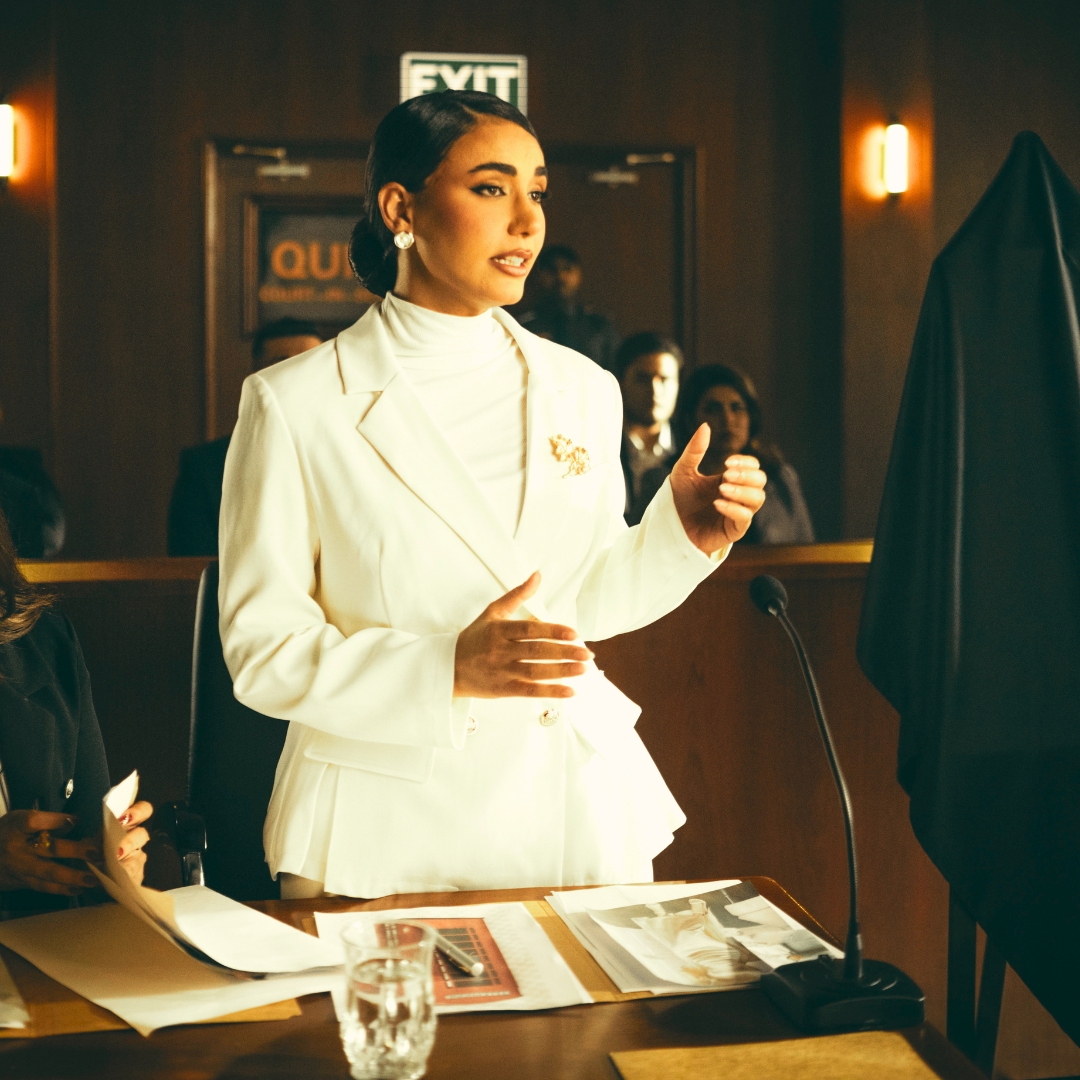
The Unbecoming: Quitting the Life Role You Were Assigned
Somewhere between your twenties and now, you became very, very good at playing the role of Capable Woman. You learned her lines so well you now live them, showing up every single day performing the role of a woman you never agreed to be.
Now you're here. Tired in a way that a week-long vacation won't touch. Doing things you don't remember agreeing to, for people who don’t even notice you’re doing them. Living a life that looks fine from the outside but feels like you’re wearing a costume for a performance.

What does it mean to quit a life role you never auditioned for — and what does it take to stop?
It means recognizing that the role you’ve been playing was never random. It was built, piece by piece, each time you kept the peace, stayed capable, and made yourself useful enough to keep around. You didn't stumble into this, you were shaped into it. And that's exactly where we need to start.
The character you play isn’t an accident.
The character you play is the result of keeping the peace and holding everything together so nobody was disappointed. The character you play becomes your reality, and therein lies the trap.
If you want to understand the architecture underneath that trap, read this article next: The 5 Invisible Social Contracts underlying women’s lives and see if you see yourself in any of them.
The wellness industry recognizes that trap without naming it because they can’t sell products if you know you aren’t the problem. So they tell you to “reinvent yourself” and “discover your authentic self”. Find yourself in a retreat in Sedona. Manifest your way back to you. Do the shadow work and emerge, renewed, into a life that looks… suspiciously like the one you just left but with a better wig.
None of that is unbecoming, you’re just learning to play the revised role of the same character.
Unbecoming isn't a rebrand. It's a demolition.
Your character goes by different names
The Good Daughter, who still adjusts herself around her mother's moods at forty-seven.
The Reliable One at work, who gets the impossible projects because she completed one once and now she owns all of them.
The Office Mom, who remembers everyone's birthdays and mediates the conflicts and keeps the team's emotional infrastructure running, entirely unpaid.
The Peacekeeper at home, whose inner monologue runs constant calculations for how to prevent meltdowns, blow-ups and hurt feelings for everyone in the house
These roles aren't character flaws, they're unconscious adaptations. Did this behavior ever really make sense? And now that you realize they exist, are you questioning how you got here? And if you want to stay?
You don't need a reason to quit your role
You have been conditioned to believe that opting out of a role; withdrawing from a dynamic or refusing a version of yourself that isn’t you, requires justification such as a crisis or a diagnosis. You think you’ll need a dramatic reason to earn the right to change so no one is offended or inconvenienced.
Nope.
You are allowed to stop being who everyone needs you to be because it costs you too much. If you need a “reason”, exhaustion is the reason. The unfairness is the reason. The imbalance is the reason. The fact that you are reading this and feeling the tightness loosen in your chest, that is the reason.
Read my own unbecoming in a vintage RV next to a river in the woods: My Unbecoming: The First Mile of My Midlife Rebuild. This is an example of unbecoming by force, rather than by choice, which happens during betrayal, heartbreak or loss.
What “unbecoming” actually looks like
Unbecoming is not a grand breakthrough. It happens with small, uncomfortable refusals that look like this:
Letting a silence hang in the air without rushing to fill it.
Saying "I don't want to" instead of "I can't.” “No thanks” works if you prefer to soften it.
Letting an adult be disappointed or uncomfortable without making it your emergency.
Noticing when you're about to perform your role then choosing not to step into it
Getting very, very bad at things you were only doing to keep the peace
The last bullet point works for men brilliantly (speaking from experience). They discovered if they suck at something, like doing laundry, you won’t ask them to do it anymore and you will take over carrying that load (no pun intended). So turn the table. Stop being capable and let another capable adult carry that load.
Unbecoming is not a glamorous transition. Nobody makes a documentary about a woman who finally stopped editing her work emails 10 times before sending to make sure it lands without offending anyone. But when the shift toward unbecoming begins, the character you have been playing gets harder and harder to remember all the lines to.
That's the goal.
We aren’t creating “a new you”. We’re removing the costume that never fit.
Before You Go
Remember, unbecoming is the decision, made over and over, to stop rehearsing a version of yourself that was never really you.
You don't have to know who you are yet, you just have to get tired of being who you aren't.
What's the first role you'd quit if you knew nobody would be disappointed?
Drop it in the comments, I love hearing from readers and I respond to every comment.
Melissa