Why Cortisol Is Hard to Tame In Perimenopause (But It’s Not the Villain You’re Told It Is)
Here's the thing about cortisol in the wellness space: it has been assigned a villain arc it doesn't entirely deserve, handed a supplement protocol it can't fully respond to, and marketed back to you as a problem you created, and can fix with the right morning routine and a gratitude journal.
You cannot out-breathe a broken stress response system, you cannot out-supplement estrogen decline, and you definitely cannot red-light-therapy your way out of a system that is structurally failing you.
What you can do is actually understand what's happening. And that's where we're starting today.
Grab a tea (or a wine, no judgment), you’re about to learn things about your body that no one has told you. And it’s a lot to absorb but it’s very important to know so you can advocate for your health.
Your Stress System Has a Control Panel — and Perimenopause Is Rearranging the Wiring
Cortisol doesn't just appear when you're stressed about your to-do list. It is produced through a command chain your body runs 24 hours a day: the hypothalamic-pituitary-adrenal (HPA) axis, a discussion between your brain and your adrenal glands that regulates everything from blood sugar to immune response to sleep timing.
Under normal conditions, estrogen acts as a kind of quality-control manager for that axis. It keeps the negative feedback loop tight, meaning that when cortisol goes up, the system gets the signal to dial it back down. During menopause, falling estrogen weakens those control systems, causing poor feedback and an overactive stress response. [7,9]
I know. That was a lot, so here’s the translation: the dimmer switch breaks. Cortisol stops responding to the usual signals: stays elevated longer and it climbs when it shouldn't.
So now you understand why cortisol levels aren’t a mindset problem. Your body’s hormone system has lost an important regulator.
And here's the part that should make you put down the Ashwagandha tincture for a second: the research shows that while estradiol (a form of estrogen) and progesterone decline during perimenopause, cortisol actually increases.[7] You are not imagining it. You are not doing stress wrong. Your cortisol is genuinely rising because the biology demands it.
Why Perimenopause Is the Perfect Storm for Cortisol Disruption
The wellness influencers are not lying when they say cortisol is a problem in perimenopause, but they aren’t telling us the whole story. And it’s a doozy.
Here’s what’s happening to your body, because you need to know. I’ve tried to simplify the terms to sound less science-y, but it is science, so…here goes:
The estrogen-cortisol discussion collapses. When estradiol (a form of estrogen) fluctuates wildly throughout perimenopause, your body’s stress response fluctuates right along with it. Studies show that estradiol can reduce the stress response [1,2] and perimenopausal women taking estrogen supplementation had notably lower cortisol. [3].That's not an argument for or against Hormone Replacement Therapy (HRT), that's just the mechanism laid bare: estrogen was doing cortisol regulation work you didn't even know it was doing.
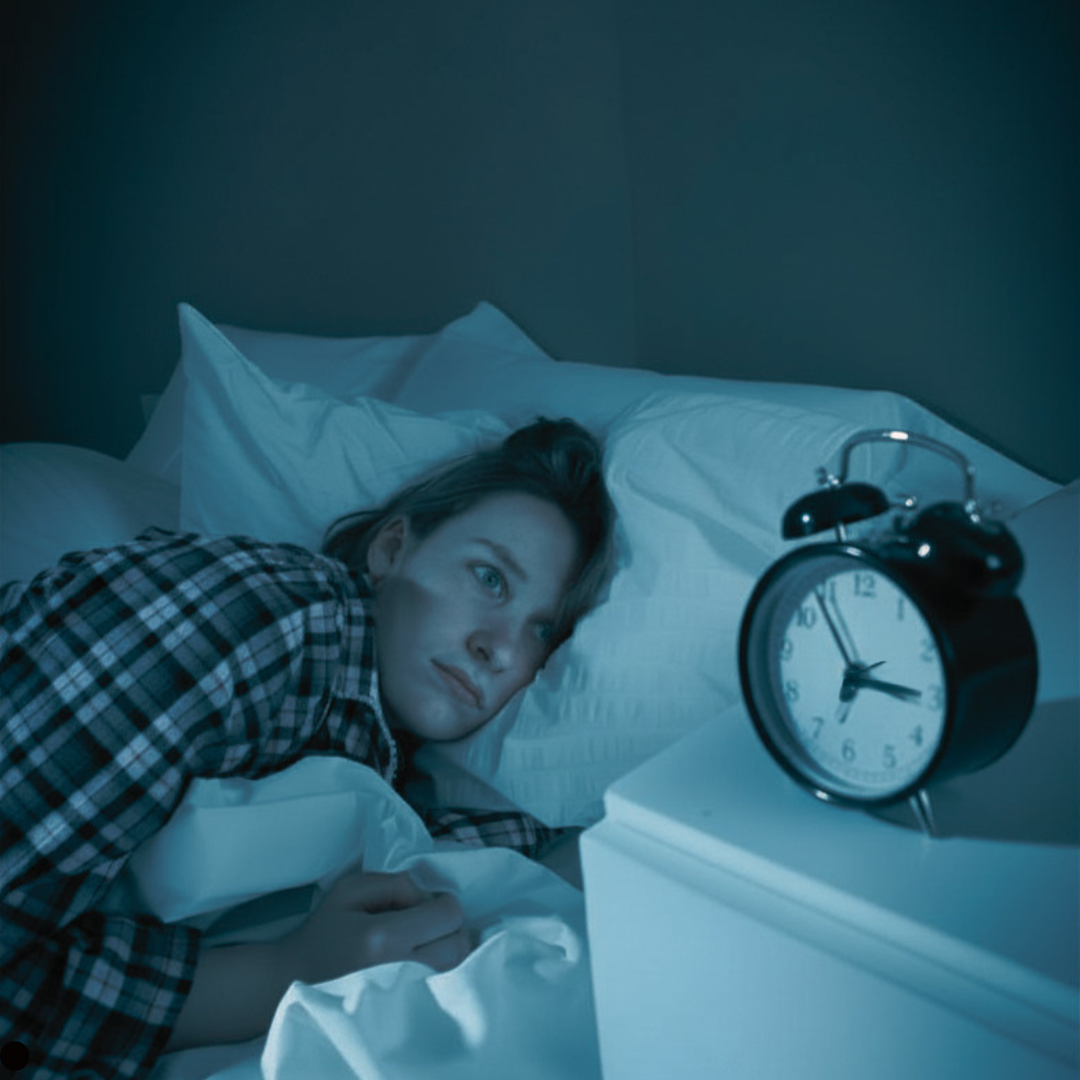
Your sleep is being ambushed — and cortisol is both the cause and the casualty.
Broken sleep prevents stress recovery and throws off cortisol levels, creating an exhaustion loop: poor sleep harms the stress system, and a stressed system ruins sleep. [9]Progesterone provides a naturally calming buffer, but when levels decline, even a normal cortisol increase at 3am is enough to trigger full waking. That’s why women in perimenopause wake up every night at 3am [12]: it’s a hormonal ripple-effect that your melatonin gummy and magnesium supplements cannot outrun.
The belly fat feedback loop is real and it's relentless. Higher cortisol correlates with abdominal fat gain, insulin resistance, and increased cardiovascular risk during perimenopause [4]. Visceral fat (the internal fat around your organs) is not passive, it burns energy and creates inflammation that worsen insulin resistance, which disrupts hormonal balance and elevates cortisol [9]. Declining estrogen levels makes all of it worse. You are not gaining weight because you fell off the clean-eating wagon, you are stuck in a biological loop
Hot flashes have cortisol fingerprints all over them. Data from the Seattle Midlife Women's Health Study found that women in the late menopausal transition showed higher cortisol levels overall, and that women with increased urinary cortisol had significantly greater hot flash and cold sweat symptom severity compared to women without increased cortisol [4, 5]. Also, cortisol disruption is associated with daily diary-reported hot flashes in midlife women [6]. Cortisol is not causing your hot flashes, estrogen decline is. But elevated cortisol is amplifying the heat, the frequency, the severity. It is pouring accelerant on a fire that was already burning.
What the Adaptogen Conversation Gets Wrong
Let's be fair to ashwagandha, there is legitimate research showing it has stress-modulating effects, [10] and one randomized controlled trial in perimenopausal women found that ashwagandha supplementation for 8 weeks increased estradiol concentrations by approximately 40%. [11] That's not nothing.
But here is where the wellness industry's cortisol conversation goes sideways: adaptogens work on the edges of the problem. It does not reach into a hormonally imbalanced stress response and correct the core mechanism. Scientists do not know a lot about how ashwagandha affects the body, and the concept of adaptogens (a substance that helps with both mental and physical stress) remains theoretical, with no conclusive evidence.
At the time this post was written, only one published study had examined ashwagandha's effects specifically in perimenopausal women [11]. One in a sea of TikTok videos, sponsored content, and supplement bundles promising cortisol salvation.
Red light therapy? Promising for cellular function and inflammation. Not a cortisol treatment.
Mindfulness? Genuinely useful. Also not going to override a broken estrogen-HPA feedback loop.
Diet? Stabilizing blood sugar absolutely helps. A small protein and fat snack before bed can help prevent the 3am cortisol-glucose spike.[12] That's a real and useful tool, but it is not a cure.
The frustration I have that you probably share, is that these tools get sold as the answer. They work best as support structures. They cannot replace what our system actually needs, which is a medical system that takes this seriously.
What "Cortisol Support" Actually Looks Like in Perimenopause
This is not where I hand you a supplement protocol and tell you to breathe. This is where I tell you that women in perimenopause deserve to be assessed as the complex, multisystem human beings they are — and most are not getting that.
Here's what actually matters:
Get your cortisol rhythm tested, not just your cortisol level. A single blood test measures cortisol at one point in time and is far less helpful for pattern evaluation than a four-point salivary cortisol test, which maps your cortisol rhythm across the day and can identify whether you are experiencing a spike in the early morning hours, whether your rhythm is flattened or reversed, and whether your DHEA levels are depleted [12]. You need a pattern, not a number.
Address the sleep disruption as a systemic problem. If hot flashes are waking you, the cortisol disruption is downstream of that, not separate from it. Treating them separately is a mistake most general practitioners make.[9]
Stop outsourcing this to Instagram. The cortisol content you're seeing on social media is designed to sell you something: a diet plan, a supplement, an exercise app. The actual research on cortisol in perimenopause is nuanced, still emerging, and often contradictory. Anyone who tells you they have the cortisol-perimenopause situation completely figured out is selling something.
Understand that this is systemic, not personal failure. The reason your body is struggling with cortisol right now has nothing to do with how hard you tried. Clinical investigations have demonstrated that women navigating perimenopause display amplified stress reactivity compared to their premenopausal counterparts [9]. Your nervous system is genuinely more reactive right now. That is the biology. That is not weakness.
The Real Problem Isn't Cortisol. It's That No One Explained Any of This to You.
You walked into perimenopause knowing cortisol was a stress hormone. You knew adaptogens existed. You probably knew about ashwagandha. What you didn't know was that the entire regulatory relationship between your estrogen and your stress system was about to shift,[1,2] that your sleep would be chemically hijacked, [9,12] that your body fat would relocate itself and become part of your inflammation story, [4]and that the severity of your hot flashes might be partly written in your cortisol levels.[5,6]
Nobody told you that because explaining systems takes longer than selling supplements.
I am absolutely not anti-supplement, but I AM anti-gaslight and anti-"just try harder using these products.” I believe women need to understand what is going on in their body so that when you do make choices — about lifestyle, about support, about clinical intervention, you're making them from a place of real information.
Your cortisol is not misbehaving because you're bad at managing stress. It is responding to a collapsing hormonal architecture that was regulating so many of your body functions behind the scenes for decades
If this article spoke to you or answered questions you don’t have answers to, leave me a comment below, I respond to every comment. You might inspire other women who are struggling with their perimenopause journey.
Melissa







Sources
Gordon, J.L., et al. (2015). Ovarian hormone fluctuation, neurosteroids, and HPA axis dysregulation in perimenopausal depression: a novel heuristic model. American Journal of Psychiatry, 172(3), 227–236.
Gordon, J.L., et al. (2016). Naturally occurring changes in estradiol concentrations in the menopause transition predict morning cortisol and negative mood in perimenopausal depression. Clinical Psychological Science, 4(5), 919–935.
Komesaroff, P.A., et al. (1999). Effects of estrogen and testosterone on glucocorticoid responses in perimenopausal women. Maturitas.
Woods, N.F., et al. (2006). Cortisol levels during the menopausal transition and early postmenopause: observations from the Seattle Midlife Women's Health Study. Menopause, 13(2), 209–220.
Cray, L.A., et al. (2010). Symptom clusters during the late menopausal transition stage. Menopause, 17(5), 972–977. [Referenced in PMC5215844]
Gibson, C.J., Thurston, R.C., & Matthews, K.A. (2016). Cortisol dysregulation is associated with daily diary-reported hot flashes among midlife women. Clinical Endocrinology, 85, 645–651.
Slopien, R., et al. (2021). Steroid hormone secretion over the course of the perimenopause: findings from the Swiss Perimenopause Study. Frontiers in Global Women's Health.
Guerrieri, G.M., et al. (2016). Effects of physiologic testosterone therapy on quality of life, self-esteem, and mood in women with primary ovarian insufficiency. Menopause. [Referenced for HPA axis testing methodology]
Liang, G., et al. (2024). Menopause-associated depression: impact of oxidative stress and neuroinflammation on the central nervous system. Biomedicines, 12(1), 184.
Lopresti, A.L., et al. (2019). A randomized, double-blind, placebo-controlled, crossover study examining the hormonal and vitality effects of ashwagandha in aging, overweight males. American Journal of Men's Health.
Gopal, S., et al. (2021). Effect of an ashwagandha root extract on climacteric symptoms in women during perimenopause: a randomized, double-blind, placebo-controlled study. Journal of Obstetrics and Gynaecology Research.
Zhang, Q., et al. (2023). Neuroendocrine pathogenesis of perimenopausal depression. Frontiers in Psychiatry, 14.
Toffoletto, S., et al. (2023). The role of the hypothalamic-pituitary-adrenal axis in depression across the female reproductive lifecycle. Frontiers in Endocrinology.
Smith, S.J., et al. (2023). Exploring the efficacy and safety of ashwagandha root extract in adults experiencing high stress and fatigue. PMC10647917.