Your Doctor Calls it Anxiety But Your Body Calls It Perimenopause.
You are Googling things at 2 a.m. that you'd be embarrassed to say out loud: Why is my heart racing for no reason? Why do I feel rage at a dirty cereal bowl in the sink? Why do I suddenly hate everyone I love? Am I going crazy or is something actually wrong with me?
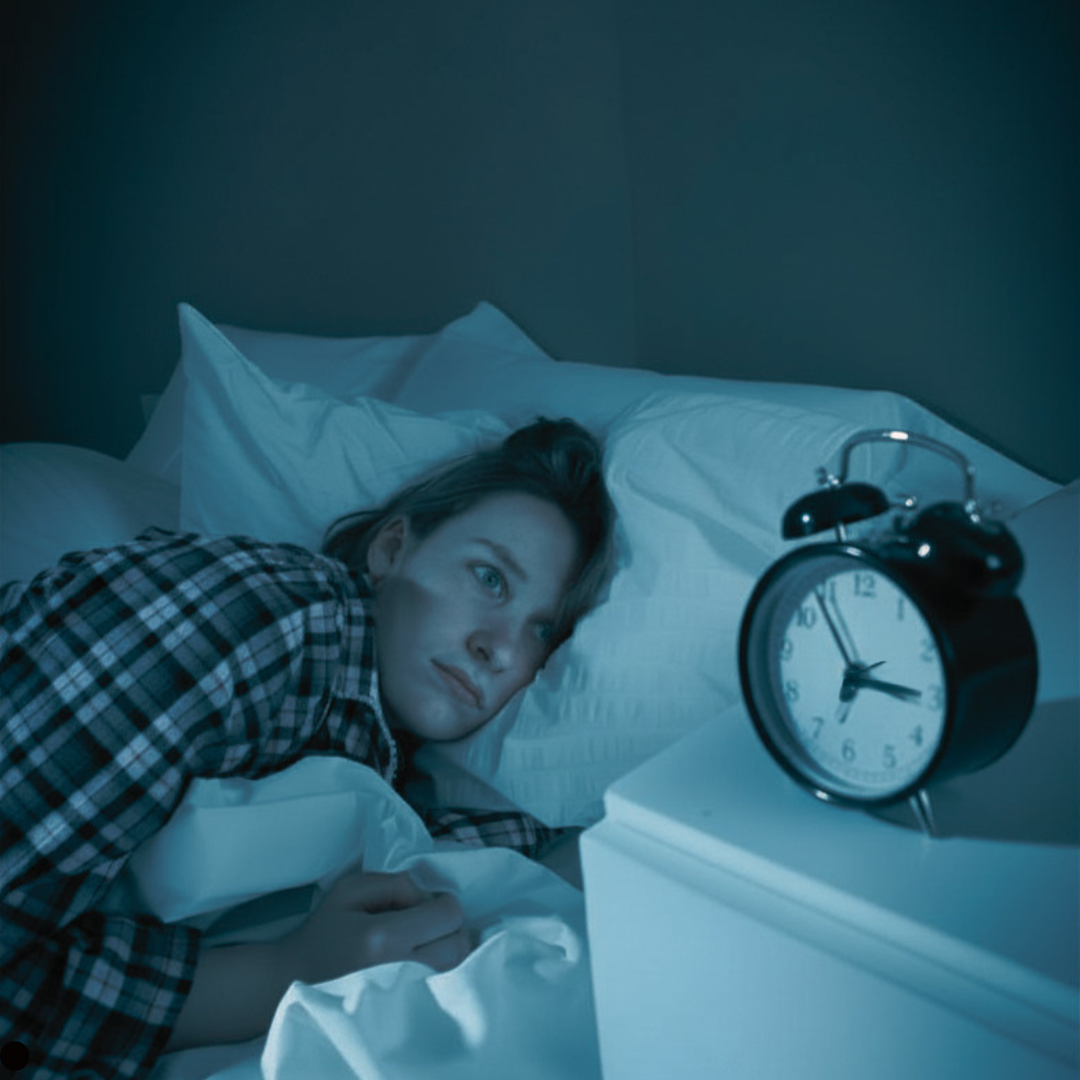
And there’s more. The things you can't quite name: the way you wake up soaked at 3 a.m. soaked and convinced something terrible is about to happen. Or the way your whole body feels like it belongs to someone slightly angrier, slightly more exhausted, and considerably less patient than in years past.
Concerned, you mentioned it to your doctor and you get fifteen minutes and a prescription.
Let’s talk about it.

Maybe the prescription was for antidepressants or anxiety. Maybe you were given a pamphlet about losing weight (the outdated, “eat less, move more” crap). Or maybe you only got the look on the doctor’s face, the one that says great, another whining woman overreacting about nothing, while your hormones never entered the conversation.
Welcome to medicine's longest running gaslighting campaign, where a woman's body in transition gets relabeled as a woman's emotions out of control.[1]
And to add guilt frosting on anxiety cake, your spouse wants to know where the woman he married went, because that version of her didn't snap at him for chewing too loudly, and she still enjoyed sex, (or she was better able to pretend to). She also didn't cry in the car over a song from her twenties, back when life was easier, she had a waist and she still liked herself.
Here's what I want you to know before we go any further: You are not going crazy and your body is not broken. Your inability to function like you did at age 35 is not a character flaw, it’s biology, babe.
Specifically, it is likely perimenopause, and it started years before you, or anyone else, recognized the symptoms for what they are.
What Is Perimenopause?
Perimenopause is the hormonal transition before menopause and it can start anywhere from your late 30s to your mid-40s, sometimes earlier.[2]
It is not a single event. It is not hot flashes and done. It is a 5-10 years-long hormonal shift, during which estrogen and progesterone levels (and testosterone to a lesser extent) stop behaving predictably and start doing whatever the hell they want; spiking, crashing, going erratic in ways that affect virtually every system in your body.[3]
Your brain runs on estrogen [4] and when estrogen tanks, so long memory, and hello brain fog and forgetfulness.
Your sleep is powered by progesterone and when that tanks, well, you know where this is going.[5]
Your mood, your memory, your ability to regulate body temperature, your heart rate, your joints, your gut health, all of it is reacting to your hormones (including those from your thyroid, a solo topic of its own). So when those hormones go whacko, your whole system goes whacko with them.
What you are experiencing is not simply anxiety, depression or stress, it’s your endocrine system doing something real and measurable that your doctor may have completely failed to investigate.[6] Why? Medical schools don’t teach hormone transitions beyond post partum, but thankfully, that has started to change. Slowly.
The clinical definition of perimenopause, if you want it: perimenopause begins when the ovaries start producing less estrogen and ends twelve months after your last menstrual period — at which point you are technically in menopause.[2] To make it more confusing, menopause is a one-day event: the day after 12 months without a period. The day after that? Post-menopause for the rest of your life.
But the transition itself? That's where most women are quietly suffering. Irregular cycles. Sleep disruption. Brain fog. Heart palpitations. [7] Mood swings, weight gain, hair loss, new food intolerances, joint pain, anxiety, rage and sadness with no obvious source.
Currently, there are over 100 perimenopause symptoms and counting.
No wonder you feel crazy.
These are not separate, mysterious, unrelated symptoms. They are one coherent story your body is telling. The problem is that most doctors were never trained to hear that story [1] and instead, treat each symptom individually to the point you might me on several medications with a host of new side effects and still no relief.
Couldn’t doctors just check your labs for menopause? Sadly, no-ish. There are no widely standardized lab tests to diagnose perimenopause (at the time of this writing). Why? Because a lab test reflects what is going on in the moment it was taken, not over time. Hormone (and cortisol) levels fluctuate too much to be definitive, so diagnosis is largely clinical, meaning it should be based on your symptoms as well as your age.[8]
While there are over-the-counter “menopause tests”, they only confirm your FSH levels are fluctuating, not the degree to which you are in perimenopause, if at all (there could be another underlying medical cause). This means a doctor who dismisses your symptoms without asking about your cycle, your sleep, your brain fog, your mood history, and your age is not giving you adequate care. They are giving you a prescription and shooing you out the door.
Your symptoms are not imaginary! Your body has been trying to tell you something for years, you just weren't given the vocabulary to understand it or the medical appointment long enough to discuss it.
That ends here.
The chemistry behind the symptoms
Estrogen isn't just about your cycle, it's one of your brain's main regulators of GABA and serotonin, the two chemicals responsible for making you feel calm and steady.[4]
In perimenopause, estrogen doesn't drop, it lurches. It spikes and crashes on its own schedule, and every time it crashes, your brain's natural brake pedal gets a little weaker. That's why socks on the floor can suddenly feel like a declaration of war. Your nervous system has less braking power than in years previous.
Progesterone is doing its own thing in the background. It's your body's natural calming hormone, partly because it converts into a compound that acts directly on the same receptors as anti-anxiety medication.[5] When progesterone declines, that calming effect declines with it, which means your baseline anxiety can climb even on a day when nothing is objectively wrong.
This is why the anxiety of perimenopause feels different from garden variety stress. Garden variety stress has a cause you can usually name, but in perimenopause, the heart that races at rest, a rage that arrives before the trigger does, a dread that shows up at 3 a.m. with no invitation, those are common and well-documented symptoms of fluctuating hormone levels[1]
How to find relief for the long game
There are so many symptoms in perimenopause, there is no single “try-this” kind of advice or herb, pill, or supplement to make all of the symptoms go away at once. Breathing and yoga works for some women, but not others. Hormone replacement therapy is not for everyone. Nutrition and movement are enormously helpful, but difficult to implement without guidance. Reducing anxiety comes from lifestyle changes, not just from Ashwagandha. And increased libido? That’s a tough one because I have met dozens of women who had testosterone implants and zip happened in the romance department.
So here is a place I suggest you begin.
Start by finding a menopause-literate provider. This is not a small ask, and I won't pretend it is, because menopause is complicated. The Menopause Society maintains a directory of certified menopause practitioners at menopause.org. Your current medical provider may be excellent at other things but genuinely under-trained in hormonal transitions[9] which means you may need a second doctor for this specific health focus.
How to begin: Track your symptoms before your appointment because "I feel terrible" is easy to dismiss, while "I've been waking between 2 and 4 a.m. four nights a week, my cycle has gone from 28 days to 40, and I've had heart palpitations at rest for three months" is considerably harder to wave away.
Your Appointment Game Plan:
Track the specifics: Note times, frequencies, and cycles (e.g., "waking between 2 and 4 a.m. four nights a week").
Check the directory: Find a certified menopause practitioner via menopause.org.
Bring an advocate who “speaks menopause” or notes: Don't let a 15-minute window rush you into a generic prescription.
The more specific you are, the harder you are to gaslight.
Know that treatment exists. Hormone therapy has spent decades under a cloud of fear-mongering that the research has largely walked back, aside from cases with legitimate individual risk.[10]
Non-hormonal options exist too. There is no single right answer here, because perimenopause isn't one-size-fits-all, but there are options, and you're allowed to know what those options are. You do not have to white-knuckle your way through a decade of misery.
So stop waiting to feel like yourself again. You’re in transition, and what comes out the other side, once you have the right support, the right information, and permission to stop pretending you're fine, is a stronger, wiser version of yourself.
Before You Go
If this article spoke to you or answered questions , leave me a comment below, I respond to every comment. You might inspire other women who are struggling.
If you're tracking your symptoms and realize your stress levels are through the roof, take my 10-question Mental Load Calculator to see exactly how depleted your system is
Melissa






Sources
Maki PM, et al. "Guidelines for the Evaluation and Treatment of Perimenopausal Depression." Menopause.2018;25(10):1069–1085.
The Menopause Society (formerly NAMS). Menopause Practice: A Clinician's Guide. 6th ed. 2022.
Santoro N, et al. "Menopausal Symptoms and Their Management." Endocrinology and Metabolism Clinics of North America. 2015;44(3):497–515.
McEwen BS, Alves SE. "Estrogen Actions in the Central Nervous System." Endocrine Reviews. 1999;20(3):279–307.
Schüssler P, et al. "Progesterone Reduces Wakefulness in Sleep EEG and Has No Effect on Cognition in Healthy Postmenopausal Women." Psychoneuroendocrinology. 2008;33(8):1124–1131.
Shifren JL, Gass ML. "The NAMS Recommendations for Clinical Care of Midlife Women." Menopause.2014;21(10):1038–1062.
Avis NE, et al. "Duration of Menopausal Vasomotor Symptoms Over the Menopause Transition." JAMA Internal Medicine. 2015;175(4):531–539.
Harlow SD, et al. "Executive Summary of the Stages of Reproductive Aging Workshop." Menopause.2012;19(4):387–395.
Kaunitz AM, Manson JE. "Management of Menopausal Symptoms." Obstetrics and Gynecology. 2015;126(4):859–876.
The Menopause Society. "2022 Hormone Therapy Position Statement." Menopause. 2022;29(7):767–794.