
When Estrogen Was the Only Thing Keeping Me Nice
Something slowly begins to happen to women in their 40’s and it is bigger than the discomfort of changing hormones. It’s the slow, creeping feeling that starts out like an itch than can’t be scratched then turns into full-blown awakening, both physiologically and emotionally. But no one wants to frame it that way because gasp, it might give you the crazy notion you’re getting your power back.
Hear me out.
The social conditioning that kept you compliant for decades is loosening its grip when estrogen levels start to drop. The good girl performance, the low-maintenance woman, the one who makes everything easier for everyone else, starts to feel like a costume two sizes too small. Then one ordinary Wednesday your husband texts to ask what's for dinner while you're mid-negotiation with a new client, and something in you goes quiet.
You're done. Done performing. Done being the good girl. Done mothering grown adults who are capable of using a stove or a microwave.
Let’s talk about it.

What happens when estrogen drops
For your entire reproductive life, estrogen has been quietly regulating the part of your brain that decides what counts as a threat. New research out of Emory found that women with lower estrogen (estradiol) levels show heightened activity in the amygdala, the brain region responsible for fear and stress response, meaning estrogen was doing real work keeping that alarm system regulated (1). As estrogen drops and swings through perimenopause, that regulation gets shakier and the alarm gets louder. Research on the menopause transition backs this up: women in perimenopause show increased stress reactions, and estradiol fluctuation has been linked to greater sensitivity to everyday stress (2, 3).
Translation: the biological doings that made it easy to swallow your opinions, smile through your own erasure, and perform "fine" is now glitching. You're not losing your grip. You're losing your patience for things that never deserved it in the first place.
Midlife is when you’re done performing
For decades you ran a one-woman production. Thoughtful daughter. Endlessly available friend. Wife who doesn't complain. Employee who doesn't make waves. Mother who has it all handled but cries in the closet.
Not anymore. The over-explaining, the pre-emptive apologizing, the performance of effortlessness, your hormones have stopped covering for it.
The quitting of these behaviors is a sort of resignation letter, and the resignation is, believe it or not, an upgrade. Women over forty are walking out of curated, shrunk-down, please-everyone existences and building something that actually holds their weight.
Midlife is the first time in your adult life you've had both the hormonal and circumstantial permission to stop optimizing for everyone else's comfort.
A woman at fifty is frequently more herself than she was at forty. Every year spent asking better questions about who you are, what you'll tolerate, and what you actually want out of life pays out. Society has been measuring women against a stopwatch since the beginning of forever, tracking fertility, dress size, how convincingly we perform youth on command. You're past those measuring sticks now. And by the way, they belonged to a marketing department the whole time.
Women who upgrade scare people
A woman who stops apologizing and shrinking gets called disruptive. A woman who used to manage everyone's feelings and now manages her own first gets called selfish, usually by the people who benefited most from the old arrangement.
“Perimenopause gets framed as a problem to be medicated into silence when it’s really a hormonal door opening onto a version of you that has been buried under decades of good behavior.”
The moment you stop absorbing everyone's nonsense without comment, a new vocabulary gets aimed at you. You're overreacting. You're going off the rails. You're not yourself lately. Raise your actual voice once and someone reaches for the word hysterical like it's 1880 and they're trying to get you committed.
The word hysterical has a dark history: calling a woman hysterical was, for centuries, the fastest way to discredit and institutionalize women who dared to express anger or grief, and the cultural residue of that history is still doing quiet work today (4). It was never really about your tone. It was about getting you back where you could be managed.
A woman managing her own nervous system instead of everyone else's is a woman who can't be controlled. So the easier move has always been convincing her she's lost her mind, and medicating her, rather than letting her free-range the way men have always been allowed to.
The medical system was never built for this
Here's where this conversation gets rage-inducing.
The doctors most women get sent to for this exact transition are, by their own professional organizations' admission, largely improvising. A recent survey found that only about 31 percent of OB-GYN residency programs offer any structured menopause curriculum at all (5). This isn't one bad doctor. It's a design flaw in medical training, built around a body that doesn't fluctuate, shift, or age out of its reproductive utility.
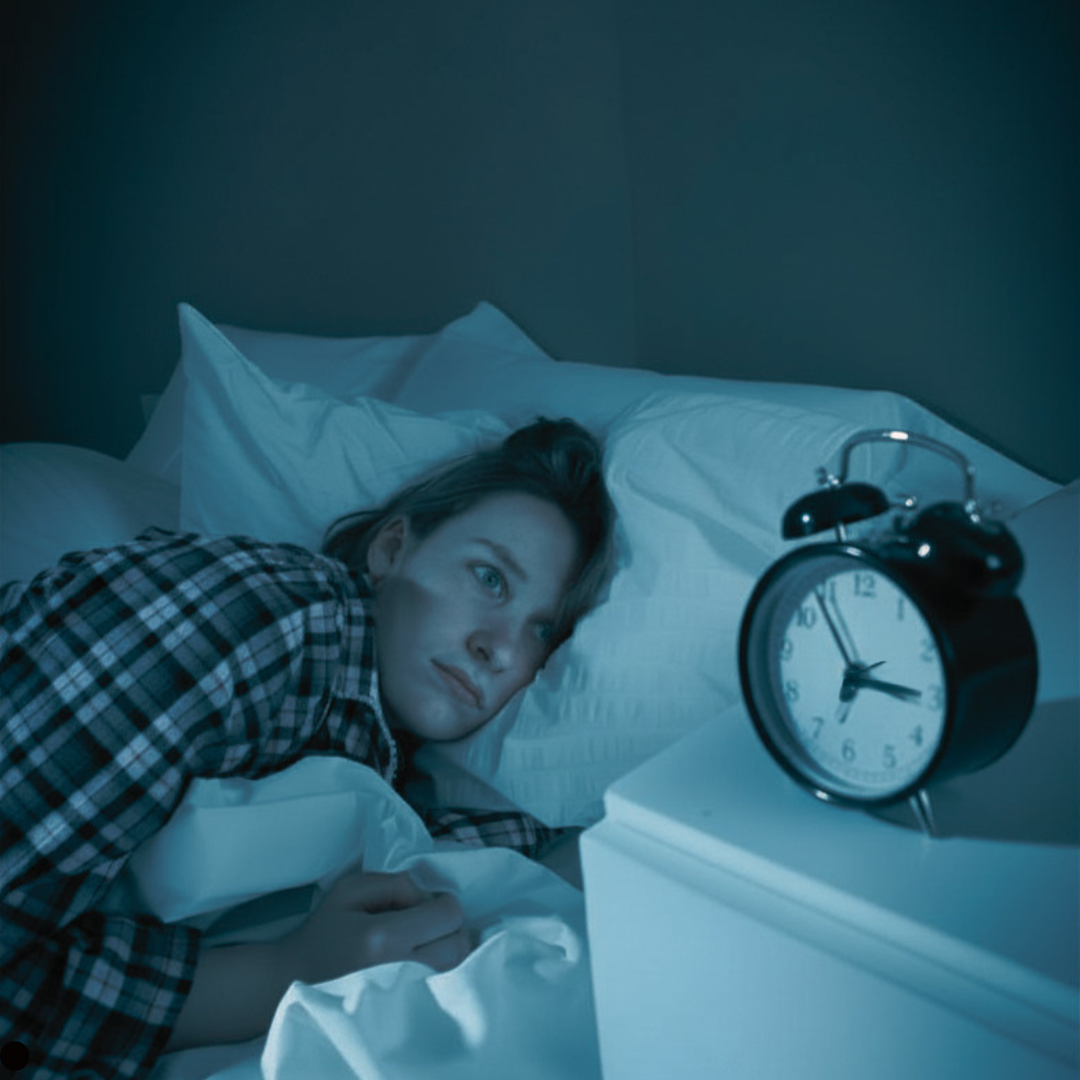
So when you bring in your fatigue, your rage, your sleeplessness, your sense that something fundamental has shifted, and the bloodwork comes back "normal," I want you to know you're not crazy and you're not making it up. The tests were never built to measure what you're actually experiencing. You get handed a prescription for anxiety and a pamphlet about sleep hygiene instead of an explanation, then sent home to manage your symptoms quietly while you get back to managing everyone else's life. That's medicine designed to keep you complacent until the appointment slot ends.
What to do with the rage
That slow-burn rage doctors keep trying to medicate is your body trying to get your attention. Don't medicate it away, don't apologize for it, and don't let anyone file it under "just hormones," as if hormones aren't a biological fact with receipts.
Learning to speak up after years of trying not to be too much is an uncomfortable muscle to build, but you can build it. Start small. Stop saying sorry before you ask for something you're entitled to ask for. Stop pre-explaining your decisions. If you're the only one who notices the laundry needs doing, wash what's in the hamper and leave what's on the floor exactly where it landed.
Those socks on the floor? Leave them. Walk on them. Let the dog chew them. Not your socks, not your problem.
Pick one small act of micro-rebellion and repeat it, daily if you can manage it, weekly if that's what your nervous system needs. Your rage isn't asking you to burn your whole life down. It just wants you to stop mothering capable adults who could be carrying half the load themselves.
Life after the veil lifts
Here's the part nobody warns you about, because it's the good part and good news doesn't perform as well as a crisis does.
Once the veil lifts, it doesn't come back down. The clarity you felt on that ordinary Wednesday doesn't fade the way a bad mood does. It becomes the new baseline. You keep noticing things you used to perform around, and you no longer continue to perform around them.
Life after the veil looks smaller in some ways. Fewer obligations you never agreed to in the first place. Fewer conversations where you're managing someone else's comfort instead of stating your own needs. And it looks bigger in the ways that matter. More energy that used to go toward being palatable now goes toward things you actually chose. More decisions that get made in your own voice instead of translated through what will keep the peace.
You'll still get called difficult sometimes. That part doesn't fully go away, because some people were counting on the old version of you and they will grieve her loudly. Let them.
What you become is a woman who knows what she'll tolerate and what she won't, who has stopped auditioning for approval from people who never had her best interest in mind, and who trusts her own read on a situation more than she trusts a room full of people telling her to calm down. That's not a smaller life. That's the first one that was ever actually yours.
When the estrogen veil lifts, you’re finally able to see clearly what was underneath it the whole time.
You.
Before You Go
I'm building a space for women who are done performing, both at home and in the boardroom. If you enjoyed this article, I invite you to stick around and join my community of fierce women.
I encourage you to subscribe to The Fierce Weekly Edit. Every Sunday, I write rebel wellness topics that call out the systems that keep us small and exhausted and offer small acts of non-compliance to break free (so you can find your fierce!). It will include the behind-the scenes series Tales From the River and include whatever settled my nervous system that week; a recipe, a book, a walk by the river. t's where you get to know the woman behind the brand, in the vintage RV parked next to a river.
And if you feel like leaving a comment down below, I welcome it. You might encourage or inspire another reader who is struggling and needs to know she is not alone.
Stay fierce,
Melissa





Sources
Emory University School of Medicine. "Hormone Estradiol Shapes Women's Brain Responses to Threat After Trauma, Emory Study Finds." Emory News Center, January 2026.
"From Physiology to Psychology: An Integrative Review of Menopausal Syndrome." PMC.
Gordon, J.L., Peltier, A., Grummisch, J.A., Sykes Tottenham, L. "Estradiol Fluctuation, Sensitivity to Stress, and Depressive Symptoms in the Menopause Transition: A Pilot Study." Frontiers in Psychology, June 2019. DOI: 10.3389/fpsyg.2019.01319.
Psychology Today. "The History of Hysteria in Women's Lives." March 2023.
Healio / The Menopause Society. "Most OB/GYN Residency Programs in US Lack Dedicated Menopause Curriculum." August 2023.

Labs don’t explain why a dirty dish in the sink makes me rage or why I can’t remember why I walked into a room. Here’s what lab tests can’t see.