
My Labs Might Be “Normal”. I Feel Anything But
You're sitting in an exam room in a paper gown, underwear hidden in your handbag, describing your recent symptoms that make no sense. The racing heart at 2pm for no reason. The rage that shows up over an empty milk carton in the fridge that doesn't match the size of the moment. The nights you lie in bed mathing how many hours of sleep you'll get if you fall asleep right now, but you’re brain won’t stop looping the rude comment your coworker made in staff meeting.
Maybe a prescription for anxiety follows the appointment. Maybe a pamphlet about stress management. What doesn't follow is a single question about your cycle, your sleep architecture, or the fact that you're 46 and carrying a mental load for your family, your aging parents and the unreliable coworkers on your work project with a fast approaching deadline.
This isn't about doctor-bashing. It's my experience, and that of hundreds of women I have worked with, trusting a medical system that spent decades researching heart disease, depression, and metabolic disorder almost entirely on male bodies, that gives every provider a training model that treats female hormonal transition as a footnote instead of a distinct, life-altering physiological event.
Women are not smaller versions of men.
Your doctor didn't fail you, but the medical education system has a huge gap when it comes to teaching women’s hormonal health when fertility begins to decline and hormones fluctuate like a rollercoaster at Dollywood.
Let’s talk about it.
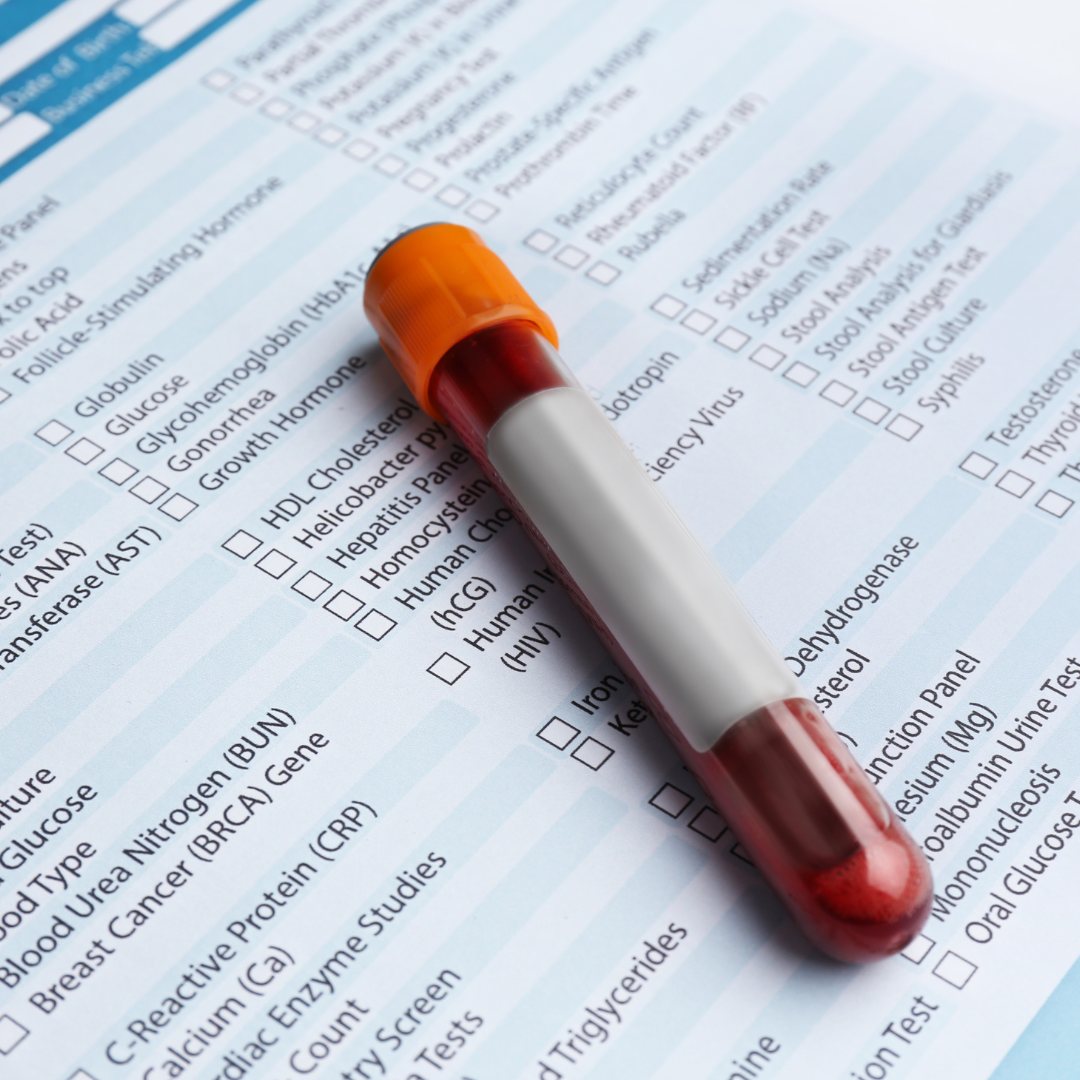
What Gets Tested
At the time of this writing (2026), there is no standard bloodwork panel that reliably captures perimenopause. Estrogen and progesterone don't decline in a straight line you can catch on a Tuesday morning blood draw, it spikes and crashes on its own schedule, sometimes rising and falling within the same day.
So a woman can walk into a lab on a day her estrogen happens to be temporarily normal, get a number that looks fine, and walk out with a result that contradicts everything she's living through at home. Anxiety has a checklist the provider can score in five minutes. Perimenopause, as it actually shows up in a body, mostly doesn't, and a majority of the symptoms present in other illnesses, making them harder to explain.
The Training Gap in Education
This part isn't a theory, it's documented. A national survey of family medicine, internal medicine, and OB-GYN residents found that a fifth of graduating residents received zero lectures on menopause during their entire training, and a majority did not feel prepared to manage menopausal patients(1).
A separate 2023 survey of OB-GYN residency programs found that while the overwhelming majority of program directors agreed residents needed a standardized menopause curriculum, less than a third of programs actually had one (2). Your provider sat in the same broken curriculum every other provider in this country sat in which explains why the appointment went the way it did.
But the education gap is slowly starting to shift. Baylor College of Medicine now runs Beyond the Pause, a continuing medical education program built specifically to train practicing physicians on menopause care (3). It's one program at one institution, not a fix for the whole pipeline, but it's proof the gap isn't a permanent feature of medicine. It's a problem someone finally decided is worthy of teaching and investing time in. And more educators are following suit which is extremely encouraging.
The Diagnosis Conveyor Belt
A 2025 national survey of perimenopausal women found that nearly forty percent felt they'd been misdiagnosed while seeking care for perimenopause symptoms(3).
Roughly two women out of every five sitting in that exam room leave with the wrong diagnosis on their chart.
When broken down further, the picture gets worse:
A third of these women received an anxiety diagnosis
Over a quarter were diagnosed with depression
Among women prescribed medication for a mental health condition, more than a third believed the diagnosis was wrong, even while taking the medication
Fewer than half said their provider even brought up perimenopause as a possibility in the first place
Education, Not Instincts
I want to be precise here because this is where it gets tempting to make it personal, and personal is the wrong target. The provider sitting across from you in that exam room wants to get this right. What they weren’t given, in four years of medical school and three to seven years of residency, was a curriculum that spent more than a passing hour on a life stage every female patient will eventually live through.
I want to state this clearly: this is in no way incompetence. It’s a medical specialty pipeline that decided this stage of a woman's life could wait, and nobody felt it important enough to return to.
As I mentioned above, that’s beginning to change.
What You Can Do Within a System That Wasn't Built For You (Yet)
You can stop walking into appointments hoping to be understood, and instead, start walking in prepared to be specific. Track your symptoms against your cycle, not just against your mood on a given day. Ask directly whether hormonal testing is being considered and if not, why not.
Bring language and examples, not vague descriptions, because a provider trained inside a thin curriculum will respond better to a precise report than to "I just don't feel like myself".
To get you started, I created a symptom tracker you can download for free and use for your next visit. Just drop your email in the box below, I would love to have you in the Finding My Fierce Community!
Before You Go
I'm building a space for women who are done performing, both at home and in the boardroom. If you enjoyed this article, I invite you to stick around and join my community of fierce women.
I encourage you to subscribe to The Fierce Weekly Edit. Every Sunday, I write rebel wellness topics that call out the systems that keep us small and exhausted and offer small acts of non-compliance to break free (so you can find your fierce!). It will include the behind-the scenes series Tales From the River and include whatever settled my nervous system that week; a recipe, a book, a walk by the river. t's where you get to know the woman behind the brand, in the vintage RV parked next to a river.
And if you feel like leaving a comment down below, I welcome it. You might encourage or inspire another reader who is struggling and needs to know she is not alone.
Stay fierce,
Melissa






Sources
Sources
Christianson MS, Ducie JA, Altman K, et al. Menopause management knowledge in postgraduate family medicine, internal medicine, and obstetrics and gynecology residents: a cross-sectional survey. Mayo Clin Proc. 2019.
Allen J, et al. Needs assessment of menopause education in United States obstetrics and gynecology residency training programs. Menopause. 2023.
Biote. Perimenopause Focus survey. 2025.
Labs don’t explain why a dirty dish in the sink makes me rage or why I can’t remember why I walked into a room. Here’s what lab tests can’t see.