Sweet Potato Spinach Frittata
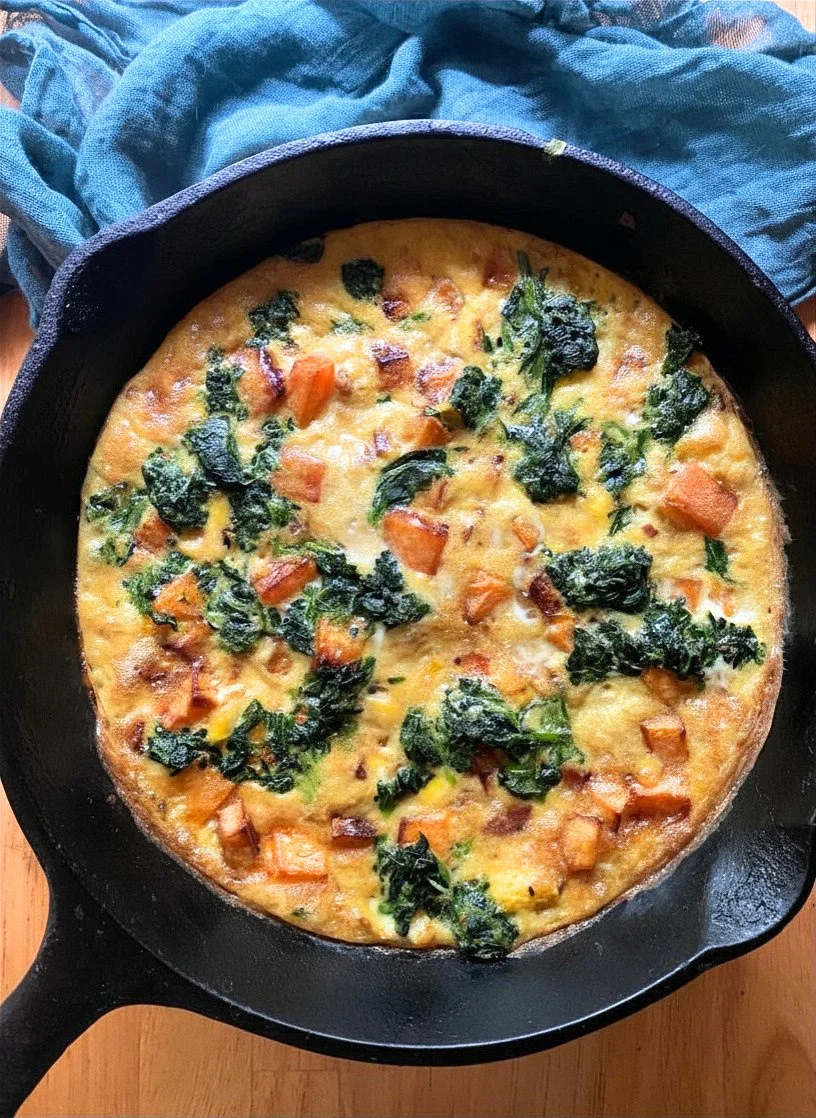
This sweet potato spinach frittata is a one-pan, 30-minute, protein-packed breakfast or dinner built for blood sugar stability and hormone support. Eggs and (plant) milk anchor the protein, sweet potato brings slow-release carbohydrate your body can use, and spinach adds the magnesium most women in perimenopause are quietly running low on. It's dairy-optional, naturally gluten-free and a good recipe for meal planning for the coming week.
Simple, whole food recipes are just one part of what I do here at Finding My Fierce. If you’re a woman over 40 and want to learn about sustainable waist loss, renewed energy, restored self-confidence, understanding perimenopause and reducing overwhelm, I’m your people. start here
Why this works
Frittatas fail for one of two reasons: too much liquid or too much time in a hot oven. This recipe controls both. Sweet potato is sautéed before it ever meets the eggs, which drives off moisture and prevents the watery layer that forms when raw or undercooked vegetables get folded into egg custard. Spinach goes in for a quick wilt rather than a long cook, since spinach releases significant water as it breaks down and a longer cook time means a soggier finish.
The egg-to-dairy ratio matters as much as the vegetables. Eight eggs to one cup of liquid keeps the proteins from being diluted past the point of setting properly, which is the difference between a frittata that holds its shape when sliced and one that collapses into scrambled egg with vegetables in it. Baking at 375°F instead of a higher heat lets the custard set gently and evenly, so the edges don't overcook while the center catches up. A loose center at the 15-minute mark isn't a sign to panic. Eggs continue cooking from retained heat after they leave the oven, and a 5-minute rest lets it finish without drying out the top.
Ingredients
(see printable recipe card down below)
Serves 6 | Start to finish: 30 minutes
2 tbsp (30 ml) olive oil
1 cup (150 g) sweet potato, peeled and cut into 1 inch chunks
8 ounces (225 g) fresh spinach
8 large eggs, beaten
1 cup (240 ml) plant-based milk (Silk soy works well) or milk of choice
1 tsp (5 g) kosher salt
1 tsp (2 g) grated lemon zest
½ tsp (1 g) coarsely ground pepper
¼ tsp (0.5 g) cayenne or red pepper flakes
2 green onions, sliced
¼ cup (25 g) grated Parmesan cheese
How to Make This
Preheat your oven to 375°F (190°C). Warm the olive oil in a large oven-safe skillet over medium heat. Add the sweet potato chunks and cook for about 8 minutes, stirring occasionally, until they're fork-tender and starting to color at the edges. Add the spinach and cook another 2 minutes, just until the spinach wilts down.
While that's happening, whisk together the eggs, plant milk, salt, lemon zest, pepper, and cayenne in a bowl. Stir in the Parmesan.
Pour the egg mixture over the vegetables in the skillet, give it one gentle stir to distribute everything evenly, then let it sit undisturbed on the stovetop for 1 to 2 minutes so the edges start to set.
Transfer the skillet to the oven and bake for 15 to 18 minutes, until the center is just set and no longer jiggles when you nudge the pan. Let it rest for 5 minutes before slicing. It firms up as it cools, so don't panic if it looks slightly underdone when you remove it.
Real talk: Sweet potatoes are good carbs
Sweet potato gets lumped in with "healthy carb" lists without anyone explaining why, so let's explain it. The glycemic response depends heavily on how you cook it; boiling produces the lowest glycemic index while baking and roasting run higher. Sautéing lands somewhere in that higher range, which is exactly why this recipe pairs it with eggs and Parmesan. Protein and fat slow down how fast that carbohydrate hits your bloodstream, so the meal as a whole behaves very differently than sweet potato eaten alone. [3]
The part worth your attention is the magnesium. Magnesium acts as a cofactor for more than 300 enzymes that regulate blood glucose, and it's one of the minerals perimenopausal women run short on most often without anyone mentioning it at a checkup. You're not eating sweet potato because carbs are evil and this one's been redeemed. You're eating it because the whole plate, eggs, sweet potato, spinach, and fat, is doing coordinated work your body needs right now.[2][3]
Know someone who would like this? Send it to her.
Storage and reheat
This frittata keeps in the fridge for up to 4 days in an airtight container. Slice it before storing so you can grab single portions without reheating the whole pan.
To reheat, a toaster oven at 300°F (150°C) for about 8 minutes brings it back to life without drying it out. Microwaving works in a pinch but expect a slightly rubbery texture, eggs and microwaves have never gotten along.
It also freezes well for up to 2 months. Wrap individual slices tightly and thaw overnight in the fridge before reheating.
Frequently Asked Questions (FAQ’s)
-
Butternut squash works as a near identical swap in texture and cook time. Regular potato is not recommended because it changes the glycemic nutritional profile, so if you're keeping an eye on blood sugar, sweet potato or squash is the better call here.
-
That's normal. Eggs puff up from the heat and settle back down as they cool. It's not a sign you did anything wrong
-
Yes. Thaw it completely first and squeeze out as much water as you can. Frozen spinach holds a lot more liquid than fresh, and skipping this step gets you a watery frittata.
Before You Go
If this is something you would add to your meal rotation, you will enjoy the Fierce Weekly Edit. Every Sunday morning, I rebel against beige modern wellness culture that tries to profit from your “lack of discipline” — the exhaustion, the physiology behind your perimenopausal symptoms, and the tips and small shifts that genuinely help along with hormone supporting recipes.
If this made meal time a little easier, leave a comment below or a review on the recipe card. Tell me what you swapped, what you added, I love hearing from readers!
And if while you are here you became curious about rebel wellness and reducing overwhelm, the rest of my blog is waiting. Start here.
Melissa



Sweet Potato Spinach Frittata
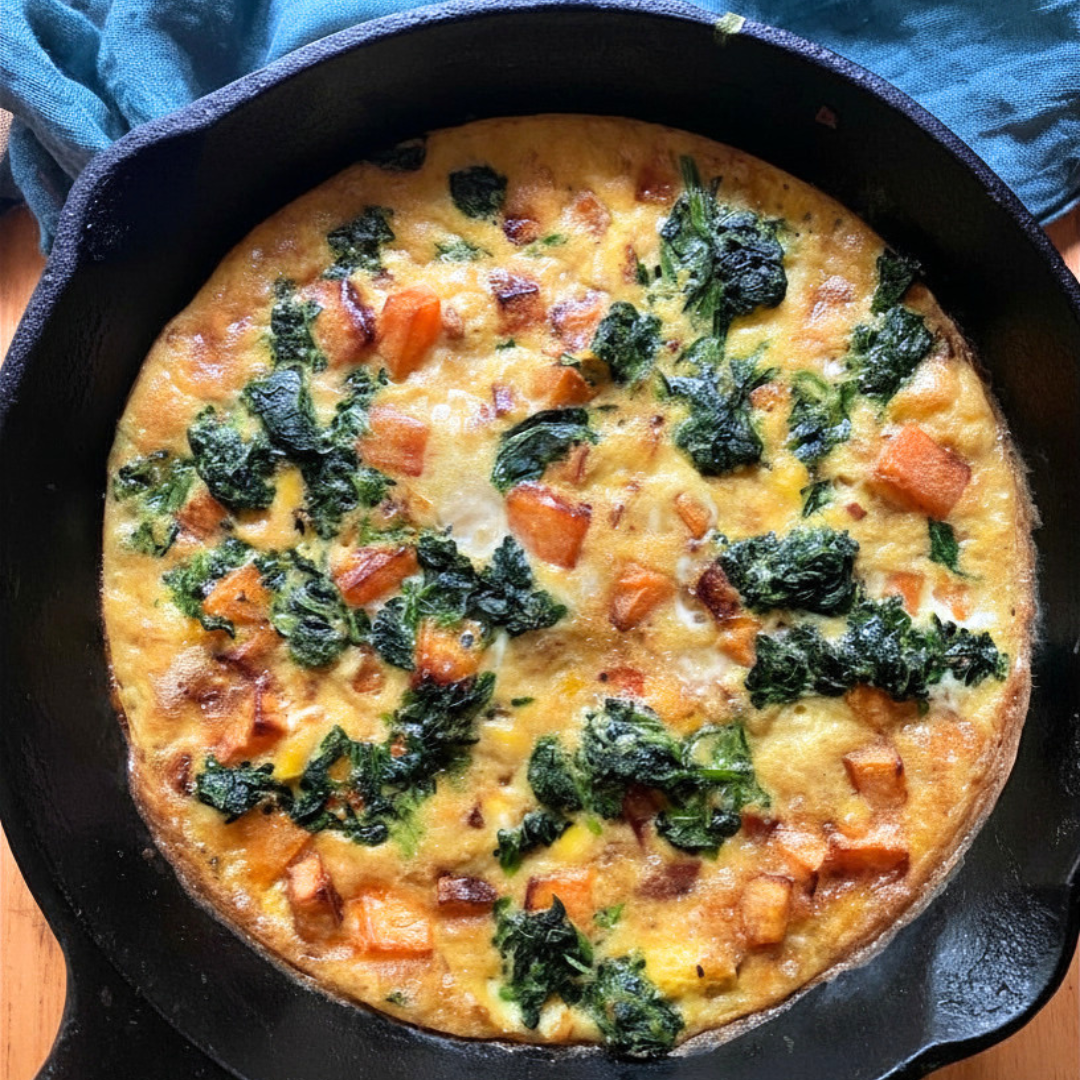
The combination of eggs, spinach and sweet potatoes supports your health goals and provides hormone support. Great for meal planning breakfast or lunch for the week.
Ingredients
- 2 tbsp (30 ml) olive oil
- 1 cup (150 g) sweet potato, peeled and cut into 1 inch chunks
- 8 ounces (225 g) fresh spinach
- 8 large eggs, beaten
- 1 cup (240 ml) plant-based milk (Silk soy works well) or milk of choice
- 1 tsp (5 g) kosher salt
- 1 tsp (2 g) grated lemon zest
- ½ tsp (1 g) coarsely ground pepper
- ¼ tsp (0.5 g) cayenne or red pepper flakes
- 2 green onions, sliced
- ¼ cup (25 g) grated Parmesan cheese
Instructions
- Preheat your oven to 375°F (190°C). Warm the olive oil in a large oven-safe skillet over medium heat. Add the sweet potato chunks and cook for about 8 minutes, stirring occasionally, until they're fork-tender and starting to color at the edges. Add the spinach and cook another 2 minutes, just until the spinach wilts down.
- While that's happening, whisk together the eggs, plant milk, salt, lemon zest, pepper, and cayenne in a bowl. Stir in the Parmesan.
- Pour the egg mixture over the vegetables in the skillet, give it one gentle stir to distribute everything evenly, then let it sit undisturbed on the stovetop for 1 to 2 minutes so the edges start to set.
- Transfer the skillet to the oven and bake for 15 to 18 minutes, until the center is just set and no longer jiggles when you nudge the pan. Let it rest for 5 minutes before slicing. It firms up as it cools, so don't panic if it looks slightly underdone when you remove it.
Nutrition Info
Fat (g)
12 gFiber (g)
2 gNet carbs
6 gProtein (g)
11 gSugar (g)
2 gNutrition info provided as a courtesy and basic guideline. I do not support calorie counting so calories are not included. The accuracy of the nutritional information for any recipe on this site is not guaranteed. View disclaimer.