
Midlife Movement Without the “Gym Bro” Vibe
We all know we're supposed to move more. Everyone knows it, the way everyone knows to drink more water. We start with the good intention of starting the new healthy habit only to find ourselves depleted from spending the day tending to everyone’s needs but our own. And that new healthy habit? Well, we’ll try again tomorrow.
Here's the truth; if you want to be the fierce, kick ass woman over 40 you know yourself to be, something has to give. That means putting down part of the load you've been carrying for everyone else and turning some of that care toward tending to your strength and stability. Because if we neglect this part of self-care, the inevitable result is steadily declining mobility, the kind that has you leaning on a walker by sixty-five instead of moving through the world on your own terms.
So let's talk about what movement is for you at this stage, in this body, and how to do it without losing another ounce of the energy you're trying to protect.
Why this matters now
Somewhere around forty, your body starts losing muscle. Research shows the decline can begin in your fourth decade of life and accelerates from there [1]. Muscle is what keeps you steady on stairs, protects your joints, and improves metabolism and blood sugar. Losing muscle isn't inevitable in the way you've been told. It's largely preventable, and the thing that prevents it is strength work, whether using weights or simply your own body weight.
As you are losing muscle, your hormones are also shifting. Estrogen decline is linked to accelerated muscle loss after menopause [1], and your nervous system is doing more work than it used to just to keep you regulated. This is why the old approach, more cardio, more sweat, more punishment, stops working and sometimes actively backfires. Your body isn’t failing you, it’s just asking for a different strategy.
Start here, not there
You do not need a bootcamp workout to start building muscle. Trust me when I tell you I tried the “all or nothing” method of getting fit in midlife and it took me out of everyday life with inflammation, increased cortisol, achy joints and the type of hunger that I could never satisfy.
What you need is an entry point gentle enough that you'll return to it and make it part of your lifestyle.
Pilates is a smart place to begin if you've been sedentary or if your joints have opinions about impact. A beginner session usually starts you on the floor with things like pelvic tilts, bird dog, and gentle bridges, all of which build core strength and control without hammering your knees or your nervous system. Most studios and a good chunk of free YouTube channels offer true beginner classes labeled as such, so you're not accidentally thrown into an advanced mat class on day one.
If dumbbells feel intimidating, they are not supposed to. Start with a pair of five pound weights and four moves: bicep curls, overhead presses, goblet squats, and glute bridges. Two sets of ten, two or three times a week, targeting the big muscle groups, is doing more for your bone density and your strength than you realize.
Mobility work deserves more credit than it gets. Ten minutes of stretching and joint circles first thing in the morning, things like cat cow, hip circles, and shoulder rolls, does more for your posture and your ease of movement through the day than you'd expect from something that doesn't leave you sweaty. Tight hips and a rounded back from a decade of desks and commutes are not fixed by cardio. They're fixed by attention.
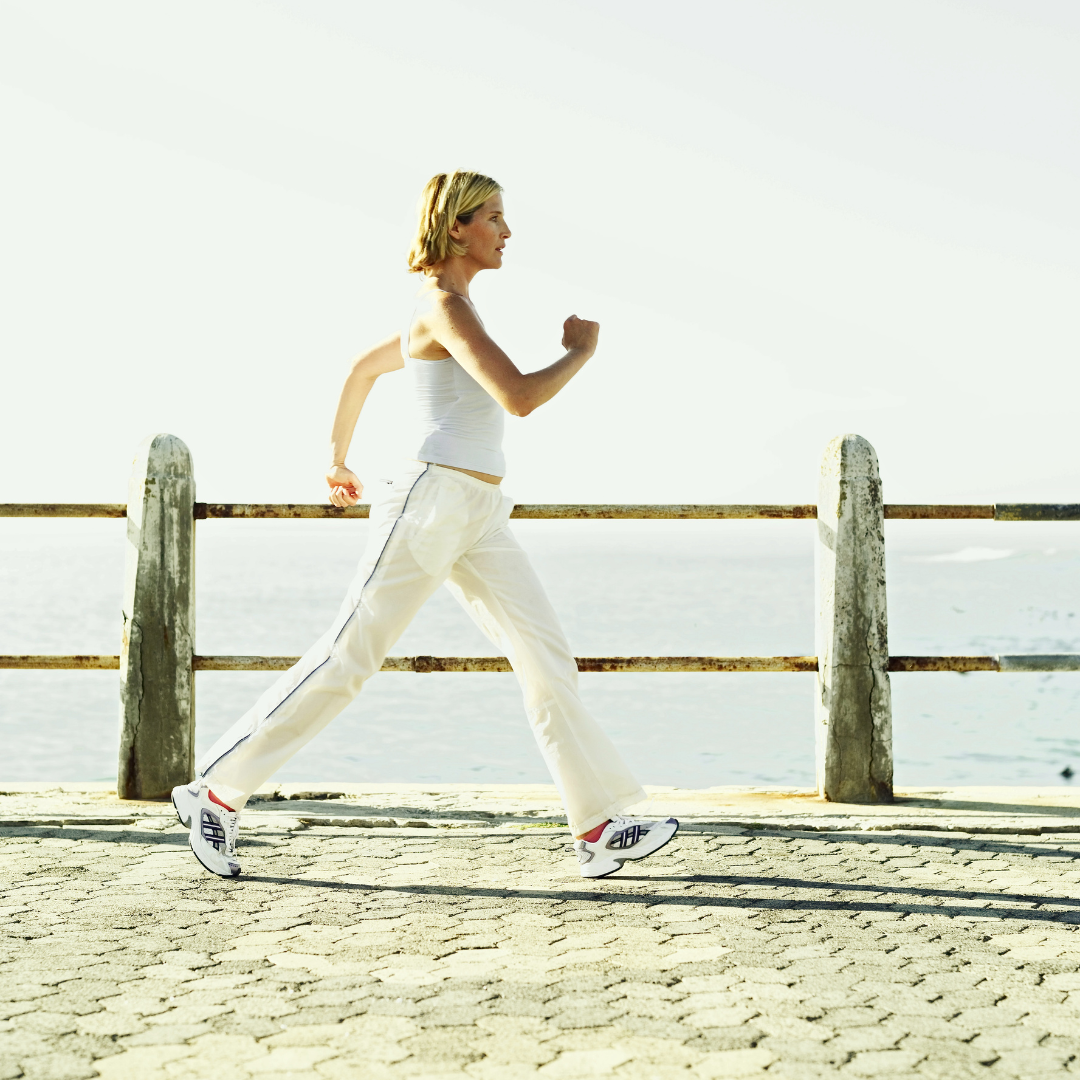
And as for walking, I’m all for it and I do it several times per week. I’m fortunate to live in the foothills of a national forest, so gentle hiking in a pine forest is a no brainer for me. I’m not talking about the treadmill here, you should always walk in the actual outdoors, weather permitting. Fifteen to twenty minutes at a pace where you could still hold a conversation is the target (called Zone 2), not a speed walk that leaves you gasping.
Daylight helps regulate your circadian rhythm, which in turn helps regulate cortisol, and there is something about uneven ground, nature sounds and open air that a moving belt in a windowless room with headphones cannot match. This is not about burning calories. It's about giving your nervous system a break while your muscles still get the benefit.
From here, we're going to talk through gentle ways to bring more movement into your life, none of which require a gym membership unless you genuinely want one.
The point is this: listening to your body is the most rebellious thing you can do against a fitness culture built on all or nothing thinking. That thinking was built for male bodies, and it simply doesn't hold up in this time in your life
Ditch the all-or-nothing mindset
Doing less, on purpose, is what happens when you rebel against the industry selling you ninety minute sweat sessions without considering whether your adrenals could afford it.
The minimum effective dose of movement is the smallest amount of movement you can perform that actually changes how you feel, not just how you look (although the visible changes will happen, they will be slower to notice).
For most exhausted women over 40 with rollercoaster hormones, that's somewhere between fifteen and twenty minutes of resistance work 2-3 days per week, but not every day.
Strength and muscle can be built across a wide range of intensities and repetitions, not only by doing punishing skull crushers and goblet squats at the punishing end of the movement spectrum [2].
Kill the “all or nothing” mindset trap right now. Even twelve consistent minutes squeezed in between chores beats the hour you keep promising yourself you'll get to eventually but never do.
Move for your nervous system, not the scales
Here's the part the industry doesn't put on a poster.
Doing long, intense cardio sessions when your body is already chronically stressed can backfire. Perimenopause and menopause change how your body handles cortisol, so exercise that ignores your nervous system can hurt more than it can help.
Reframe movement as regulation, not punishment. Resistance training earns its keep by supporting lean muscle mass and bone density during a transition where estrogen is no longer doing that job for you [2].
Movement does not require you to feel wrecked afterward to know that it worked.
The “does this count?” audit
You've been discounting movement your whole life because you were taught only suffering and intensity counts.
It’s time to reframe that belief.
Does the furious walk around the block after a bad email count as movement? Yes. Does chasing a toddler through a grocery store count? Sure does. Does ten minutes of pilates on your living room floor while you’re waiting on the pressure cooker to make dinner count? Also yes.
Your nervous system doesn't know the difference between an expensive studio class and pacing your kitchen in frustration. It just registers that you moved your body
The importance of rest
And here's some information that generally is left out of every fitness plan you’ve downloaded.
Your recovery days are doing just as much work as your movement days, sometimes more.
Muscle doesn't get stronger during the workout, it gets stronger in the repair afterward while you sleep and rest and let your body catch up. If you skip the recovery part, you're interrupting the actual process that builds the strength you're after.
For a nervous system already managing a hormonal transition, recovery is doing double duty, letting your body repair and build tissue while also bringing your cortisol back down out of the red zone the workout put it in.
Treat your rest days like part of your workout plan because they are.
Are you are going to feel guilty the first time you skip a day? Absolutely. You are going to compare yourself to the woman on your feed who apparently trains for competitions in her sleep. Ignore her. She is likely a professional and she’s not living your life. Her protein intake, macros and lack of enjoyment in life is not what’s missing from your life.
Rest is not a reward, it’s a requirement, the same way water and sleep are requirements, and no amount of dumbbells is going to change that math.
Do what works for you
Make whatever movement that feels good to you yours. Listen to your body and your energy levels, not what 20-something influencers are telling you,because YOU get to decide what works for your body.
Before You Go
I'm building a space for women who are done performing, both at home and in the boardroom. If you enjoyed this article, I invite you to stick around and join my community of fierce women.
I encourage you to subscribe to The Fierce Weekly Edit. Every Sunday, I write rebel wellness topics that call out the systems that keep us small and exhausted and offer small acts of non-compliance to break free (so you can find your fierce!). It will include the behind-the scenes series Tales From the River and include whatever settled my nervous system that week; a recipe, a book, a walk by the river. t's where you get to know the woman behind the brand, in the vintage RV parked next to a river.
And if you feel like leaving a comment down below, I welcome it. You might encourage or inspire another reader who is struggling and needs to know she is not alone.
Stay fierce,
Melissa
Sources
Sarcopenia and Associated Factors in Adults Aged 40 and Above: A Study Conducted in Primary Healthcare. PMC, 2024.
Resistance training alters body composition in middle-aged women depending on menopause status: A 20-week controlled trial. PMC, 2023.
Gordon, J.L., et al. Perimenopausal vasomotor symptoms and the cortisol awakening response. Menopause, 2020.
Grueling workouts to build muscle made me inflamed, exhausted and took me out of life, so I quit listening to “experts”. Here’s what I do instead.