How Hormones Fuel the Overthinking Loop in Midlife (And How to Shut It Down)
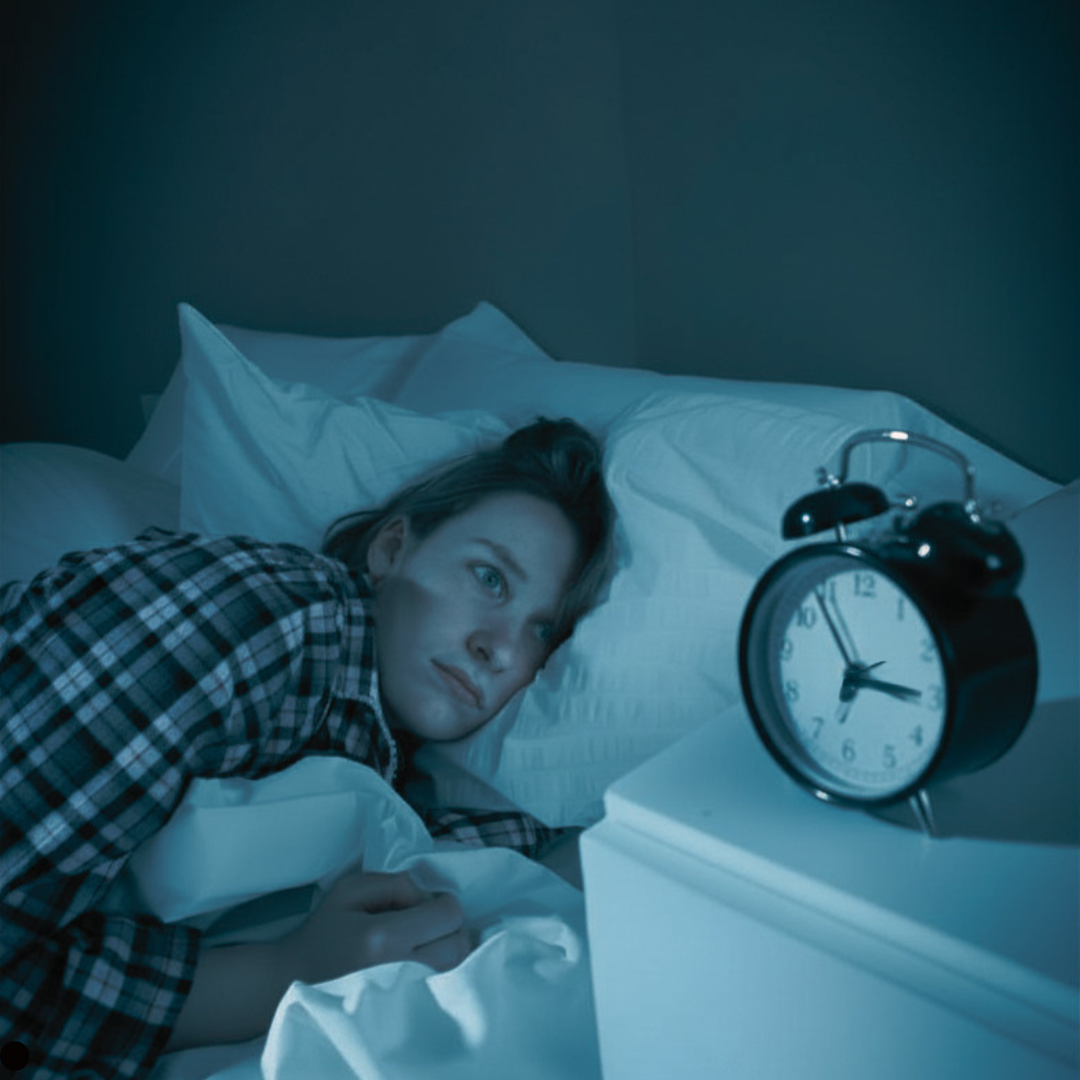
It’s 11:47 p.m. and you’re staring at the ceiling again. Your brain has decided this is the perfect moment to run a high-definition replay of a conversation from earlier today, specifically that one sentence you said that might have landed wrong. As you toss and turn, you’re likely wondering why you can’t just "let it go" or why you’ve suddenly become so sensitive.
Here is the truth you need to hear: You are not losing your mind, and you are not "just a worrier."
What you are experiencing is the exhausting intersection of carrying a long-term mental load and the biological shifts of midlife. Overthinking isn't a personality flaw; it is a highly active survival mechanism designed to keep you safe and perimenopause actively amplifies it.
If your quiet background thoughts have suddenly escalated into a five-alarm fire, it is because declining estrogen is changing how your brain handles stress.
Let’s talk about it.

What “overthinking” is
Overthinking, or what clinical psychology politely calls "rumination", isn't a mental glitch. It is a highly sophisticated, exhausting loop your brain built to protect you. It’s the direct result of three survival strategies you’ve been forced to master:
Perfectionism on Overdrive: Where every single outcome feels like a high-stakes, urgent emergency.
Strategic People-Pleasing: Rehearsing conversations in advance to orchestrate everyone else's comfort and prevent disappointment.
Weakened Boundaries: Trying to control the external chaos because you don’t believe you are allowed to just say "no" and walk away.
Research shows women are significantly more likely than men to fall into this loop—and it’s not because we are more fragile or dramatic. It’s structural. We are systematically conditioned to believe we are personally responsible for the emotional temperature of every room we walk into.
If you’ve spent decades reading the room, smoothing over awkward silences, and managing everyone else's feelings to prevent a blowout, of course your brain built an obsessive monitoring loop. You weren't born a worrier; you were highly trained for unpaid emotional labor. [5]
The mental load's quieter cousin
This constant "room reading" is why overthinking is actually the mental load's quieter, meaner cousin. While the traditional mental load has you tracking external logistics—like appointments, groceries, and dentist visits—this loop has you running a continuous, brutal background audit of yourself.
Instead of just managing the household calendar, your brain is also busy transcribing and analyzing your own behavior in real-time:
What did she mean by that long pause?
Did I talk too much in that meeting?
Was that text too blunt?
You aren't just carrying the physical burden of keeping life moving; you are carrying a massive load of self-doubt, checking your every move against what other people might think, might have said, or might be feeling.
No wonder you are completely exhausted. Your brain is working a double shift, and one of those shifts is spent policing yourself.
Why perimenopause turns the loop up to eleven
If overthinking has been a quiet background hum your whole life but suddenly escalated into a five-alarm fire around your forties or fifties, you're not imagining it. And no, you aren't suddenly "losing your grip."
Estrogen is a master neurological architect. It binds directly with receptors in your hippocampus and prefrontal cortex—the brain regions responsible for memory, emotional regulation, and executive function (the system that plans, filters, and makes decisions).
When estrogen levels are steady, these systems hum along beautifully. But during perimenopause, estrogen doesn't just slowly fade; it swings wildly on a rollercoaster with no seatbelt. When those levels plummet, your brain's ability to filter out background noise and inhibit unhelpful, looping thought patterns drops with them.
Meanwhile, cortisol (your primary stress hormone) naturally tends to run hotter during midlife. Higher cortisol pulls your nervous system toward your brain's alarm center (the amygdala) and away from your logical reasoning center. You are left with a brain that has less capacity to shut a thought down, even as more alarm bells are ringing.
Why you’re not “just a worrier”
When you're physically exhausted and hormonally depleted, your brain defaults to its oldest, most reliable coping mechanism: trying to think its way to safety.
If you’re a chronic overthinker, you’ve probably been called "oversensitive," "dramatic," or told that you "overanalyze everything." But replaying a conversation until you feel safe isn't a personality quirk. It is your biological threat-detection system doing exactly what it evolved to do.
For most of human history, social rejection or being cast out of the group meant literal death. Your lizard brain still treats unclear social cues—like a weird text or a brief silence in a meeting—exactly like a physical predator, refusing to let you rest until the "threat" is resolved. In fact, neurological studies show that social rejection and criticism light up the exact same pain matrices in the brain as physical injury.
This is also why the loop refuses to sleep when you do. Cortisol levels are meant to drop in the evening to allow for deep rest. But when you are stuck in a chronic safety-seeking loop, your bedtime cortisol runs high, keeping your nervous system keyed up long after the sun goes down. That is why 11:47 p.m. becomes prime overthinking time.
Breaking the overthinking loop
You cannot think your way out of a thinking problem and to be honest, the problem isn’t about thinking it’s about safety. For whatever reason, your brain doesn’t feel safe with what has already happened or what could happen in the future. Real relief comes from action, not further analysis [24][30].
1. Ground yourself when you notice a loop happening (or when someone calls you on it because you’re “overreacting”). Don’t analyze it, just name it like this, “Ah-ha, this is the loop she was talking about” and then watch what happens: that split-second interruption creates distance between you and the replay, which pulls you back into the present where you can practice “grounding” yourself to get out of the loop.
The method you’re going to practice is called the 5-4-3-2-1 Method (yes, that’s the real title) and there is real science from clinical psychology (cognitive behavioral therapy, to be exact) to back this up. In short, it has to do with calming the parts of your brain experiencing an overthinking spiral, panic attack or high-stress session, by interrupting automatic negative thoughts and cognitive distortions.
Here’s what you do: look around and name 5 things you can see, 4 things you can physically feel, 3 things you can hear, 2 things you can smell, and 1 thing you can taste.
The 5-4-3-2-1 method works because it physically rewires your brain's anxiety response in real-time. When you spiral, your threat-detecting part of your brain (amygdala) sounds a false alarm, triggering fight-or-flight stress. By forcing yourself to systematically identify sights, textures, and sounds around you, you send an immediate biological safety signal to quiet that alarm. This sensory shift boots up the part of your brain (prefrontal cortex) where logic lives and completely hijacks your limited cognitive bandwidth—leaving literally no room left for runaway thoughts.
It’s not just a distraction; it is a neurological off-switch for your overactive mind.
If you'd like to watch a quick guided demonstration of how to practice this effectively, you can check out this short video on The 5-4-3-2-1 Method: A Grounding Exercise to Manage Anxiety
2. Schedule “worry time”. Give yourself permission to loop but only with a time limit. Give yourself 15 minutes with zero distractions to replay the scenario. Think your thoughts, feel your feels, write down all of the possible scenarios and what ifs. Then when the timer goes off, say “I'm done thinking about this” out loud and let that be the final word for the day.
If your brain tries again later, simply repeat the boundary: “We already processed this today. We are done”. Then, change your physical environment—drop your shoulders, change the room, go outside and take a deep breath to signal to your nervous system that the audit is officially closed and you are safe.
If you tend to be a chronic overthinker, you can start planning “worrying time” into your days. If your brain starts spiraling over a topic at 10am, tell it “not now, I will think about that at 6pm this evening”. You will be surprised by how many of those worries feel silly or have resolve themselves by the time your session rolls around.
You Can Do This
Shifting out of an overthinking spiral is completely possible—and it starts with a physical choice, not a mental debate. This is exactly how I, and so many of the women I work with, have learned to finally quiet the noise. Like any new skill, reclaiming your mental space takes practice, so please give yourself grace as you navigate this shift.
Remember, your nervous system requires evidence, not permission. Every time you make a tiny decision and survive the outcome without catastrophe, your brain updates its model of you as someone who is safe and capable.
That update doesn't happen through a pep talk in the mirror; it happens through lived experience and real-world data, one small step at a time. By setting small boundaries and interrupting the replay loop today, you are actively rewiring a lifelong habit of endless thinking into a practice of practical, peaceful doing.
You've got this.
Before You Go
If this felt familiar or spoke to you, you will enjoy The Fierce Weekly Edit. Every Sunday morning, I rebel against beige modern wellness culture that tries to profit from your “lack of discipline” — the exhaustion, the physiology behind your perimenopausal symptoms, and the tips and small shifts that genuinely help along with hormone supporting recipes to make dinner one less thing to stress over.






Sources
McEwen BS. Protective and damaging effects of stress mediators: central role of the brain. Dialogues Clin Neurosci. 2006;8(4):367-381.
Chrousos GP. Stress and disorders of the stress system. Nat Rev Endocrinol. 2009;5(7):374-381.
Rozanski A, Blumenthal JA, Kaplan J. Impact of psychological factors on the pathogenesis of cardiovascular disease and implications for therapy. Circulation. 1999;99(16):2192-2217.
Thayer JF, Yamamoto SS, Brosschot JF. The relationship of autonomic imbalance, heart rate variability and cardiovascular disease risk factors. Int J Cardiol. 2010;141(2):122-131.
Slavich GM, Irwin MR. From stress to inflammation and major depressive disorder: a social signal transduction theory of depression. Psychol Bull. 2014;140(3):774-815.
Kiecolt-Glaser JK, et al. Chronic stress and inflammation: the role of body composition and socioeconomic status. Proc Natl Acad Sci U S A. 2015;112(16):4939-4944.
Glaser R, Kiecolt-Glaser JK. Stress-induced immune dysfunction: implications for health. Nat Rev Immunol. 2005;5(3):243-251.
Harvey AG. Sleep and circadian rhythms in bipolar disorder: seeking synchrony, harmony, and practical treatment targets. Lancet Psychiatry. 2017;4(4):309-321. (See sections on worry and insomnia.)
Mayer EA. The neurobiology of stress and gastrointestinal disease. Gut. 2000;47(6):861-869.
Geisser ME, et al. Muscle tension and chronic pain: mechanisms, assessment, and management. Clin J Pain. 1994;10(4):283-299.
Nolen-Hoeksema S. The