Essentialism for Burnout: Why Decluttering Your Home Won’t Fix Your Mental Load
You finally got around to reorganizing the linen closet because you’re ready for things to finally change for the better.
You bought the matching baskets. You folded your towels into thirds the way the woman on Instagram showed you, the one with the spotless laundry room and the suspiciously unlimited amount of free time. You returned two of the throw pillows you were going to add to your collection and you gave away seventeen things that don’t spark joy.
And you still woke up at 3 a.m. with your chest on fire.
Here's what nobody in the beige corner of the wellness industry is going to admit: your stuff was never the problem.
The overwhelm you are drowning in right now has nothing to do with how many cat figurines you own and everything to do with how much of yourself you have been giving away for free.
Let’s talk about it.
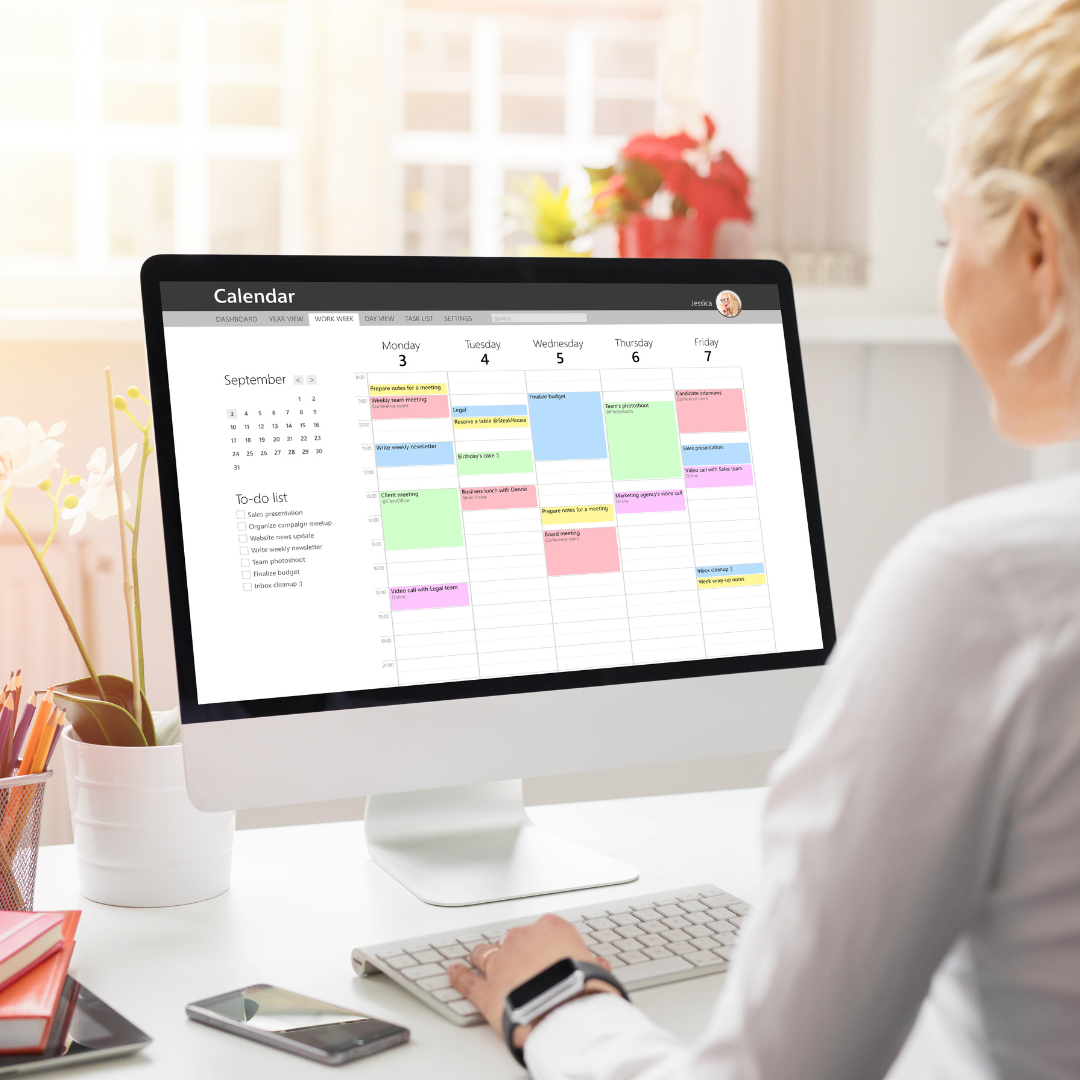
Burnout and overwhelm are the results of living a life built around everyone else's needs. Every wellness trend gave you a checklist to download with new tasks to perform on top of your already unmanageable to-do list, when what you really needed was permission to drop your burden.
What Essentialism Is
Essentialism is not an aesthetic, it’s not a cleaning method and it’s also not about owning less stuff, though that can be a by-product.
Essentialism, as Greg McKeown defines it, is the disciplined pursuit of les, but the less he's talking about is commitments, obligations and yeses.⁵ It is the practice of asking what is essential and then having the audacity to let everything else go.
That is a fundamentally different project than decluttering.
Minimalism asks: what can I get rid of?
Essentialism asks: what actually deserves to be here?
One of those questions is about your stuff. The other one is about your life.
I'm talking about the kind of ruthless simplicity that starts with your energy and your attention, the two areas you have been hemorrhaging in every direction while the wellness industry handed you another beautifully formatted checklist to add to your to-do list.
So if Essentialism is about our time and attention, why did the wellness industry turn simplicity into a closet-cleaning project?"
The Lie of The KonMari Method of Minimalism
The people who are trying to sell you Minimalism as an aesthetic sold you a very pretty lie.
The lie goes like this: if you own fewer things, and if you organize what’s left into color-coded baskets with color-coded labels, it will spark joy and you will feel less burdened. Clear surfaces equal a clear mind. A capsule wardrobe will simplify your decisions and owning only 13 items of clothing will drop your cortisol levels.
I make light of “The KonMari Method”, to prove a point: she gave up on her organizing nonsense after she had kids. So the woman who built a global brand, two Netflix series, and several bestselling books on the premise that a tidy home changes your life quietly admitted that real life with children makes the whole system unworkable. And then the internet lost its mind calling her a fraud, which is its own perfect little parable about what happens when women don't perform to the standard they sold us.
To be fair, there is a version of Minimalism that is a legitimate philosophy about intentional ownership and mindful choices. And sadly, it became a Pinterest aesthetic with white kitchens, bookshelves arranged by color, and the quiet implication that your chaos is a housekeeping problem.¹
That Pinterest version did something specific worth naming: it took the very real feeling of too much that women were experiencing and gave them another project to accomplish without ever touching the actual source of the weight.² It tried to cure a systemic problem with an interior design solution.
We make thousands of decisions daily and the quality of our decision degrades as the day goes on.³
The decisions that are actually crushing you are not whether to keep the blender. They are the invisible decisions that never stop. Who is managing the school schedule. Who remembered to call the pharmacy. Who noticed the thing before it became a crisis and quietly handled it without anyone ever knowing there was a thing to notice.⁴
No amount of reorganizing your pantry touches that.
Why We Fell for the Decluttering Version
Why do so many of us believe the declutter your closets theory?
Because the closet version is manageable and profitable. Notice the irony of having to buy special products (and books and methods) to help you declutter? It’s not lost on me.
You could easily declutter your closet on a Saturday while the kids are napping and the spouse is golfing and you would see the immediate results and pat yourself on the back for actually finishing something for once. You could post the before and after as validation that you do indeed have your shit together. You could feel the specific satisfaction of a solved problem in a life full of problems that don’t get solved.⁶
The real work of essentialism is this: looking at your calendar, your commitments, the relationships that are all withdrawal and no deposit, the life roles you stepped into and have been performing ever since. That work is slower, messier, and it does not photograph well.
Essentialism also asks you to stand up for yourself. And for most of the women reading this, disappointing people lands like a moral failure.⁷ The Good Girl programming runs deep, and it would much rather you reorganize the bathroom cabinet than ask you to take something off your plate that someone else put there.
The minimalism aesthetic gave us a way to feel like we were addressing the overwhelm without ever having to do the scary part. And the wellness industry, the one selling serenity diffusers and capsule wardrobes and color-coordinated planner inserts, has absolutely no financial interest in pointing that out.⁸
For years, Good Girl programming allowed you to muscle through that invisible load anyway. But then your biology shifted—and your body officially revoked your ability to pretend it's fine.
Why Perimenopause Makes Essentialism Non-Negotiable
The menopause transition is a complicated biological process, not just a random hormonal inconvenience.
The mechanisms that used to let you push through on adrenaline and sheer willpower are literally working differently now. The brain you are trying to run your overloaded life on is operating with a different energy budget than it was ten years ago, all thanks to perimenopause.
Falling progesterone and estrogen in perimenopause weaken the body's control of stress, causing higher, longer-lasting cortisol. In short: your invisible load is on a nervous system that's already overheated, low on fuel, and has fewer hormonal buffers than before.
Why Your "Yeses" Are Triggering a Physical Threat Response
When progesterone drops in perimenopause, your brain loses its primary buffer—the mechanism that supports GABA pathways and calms your central nervous system. Without that hormonal shock absorber, your body has a much lower tolerance for sensory and cognitive overload.
Every time you say "yes" to a non-essential task when you are already running on empty, your brain doesn't just register a busy schedule; it registers a boundary violation as a physical threat.
That 3 a.m. chest-on-fire feeling isn't a failure of willpower or time management. It is your sympathetic nervous system stuck in fight-or-flight because your baseline cortisol is overflowing, and your brain literally does not have the bandwidth to keep absorbing everyone else's needs.
In non-sugar coated Melissa terms: your bullshit meter is in the red and everyone makes you feel stabby.
This is not a productivity problem you can solve with fewer snow globes. It is a mental load problem, and your body is now less equipped to absorb nonsense silently like it used to be able to. Your tolerance for BS drops as you enter perimenopause (in your early 40’s), so if you thought you were going through a sudden personality change, it’s really your body sending you a very clear message: I’m not doing this anymore and you can’t make me.
Essentialism Isn’t a Mindset—It’s a Nervous System Intervention
We tend to view essentialism as a productivity hack or a philosophical exercise. But when your body is navigating hormonal shifts, essentialism is a physiological necessity.
Real essentialism is when you stop volunteering for the thing you never wanted to do in the first place but just kept doing because no one else stepped up. The guilt from not being The Good Girl was unbearable, so you gave in.
But every obligation you drop, every boundary you enforce without an elaborate apology, and every non-essential project you hand back is a direct message to your nervous system that it is safe to step out of high alert.
You cannot supplements-and-smoothie your way out of sustained cortisol elevation if you are constantly pouring your energy into a bucket with a hole in the bottom. Removing the non-essentials isn't about being minimalist—it's about lowering your baseline stress so your brain and body can actually repair.
Choosing What Needs to Go
Essentialism is looking at your week and noticing that about sixty percent of what's on your list is there because of an expectation you absorbed so long ago you forgot it wasn't yours.⁹
It’s when you finally say I don't have the capacity for that right now and hand it back over to the other capable adult without a TED talk explanation of why.
Start with your yeses. The ones that you hand out freely before you've even checked whether you have anything left to give. The ones that are powered by obligation, fear of conflict, or the very old belief that your value is proportional to your usefulness.¹¹
You don't have to overhaul your entire life or clear your entire calendar by tomorrow morning. Essentialism isn't another performance metric or an all-or-nothing lifestyle overhaul. It starts with one small, quiet refusal.
The next time an expectation lands in your lap that makes your chest feel tight, pause before you auto-pilot into a "yes." Give your nervous system a second to register that you actually have a choice—and that protecting your peace isn't selfish; it's self-preservation.
Before You Go
If this article spoke to you or answered questions, leave me a comment below, I respond to every comment. You might inspire other women who are struggling.
If you don’t even know where to start filtering the noise, take 2 minutes to check your dashboard with my Mental Load Calculator. It will give you a real score reflecting how depleted you are, plus a simple tip to lighten the load.
Stay fierce,
Melissa




Sources
Chayka, K. The Longing for Less: Living with Minimalism. Bloomsbury Publishing, 2020.
Federici, S. Caliban and the Witch: Women, the Body and Primitive Accumulation. Autonomedia, 2004.
Baumeister, R. F., Bratslavsky, E., Muraven, M., & Tice, D. M. "Ego Depletion: Is the Active Self a Limited Resource?" Journal of Personality and Social Psychology, 74(5), 1998.
Daminger, A. "The Cognitive Dimension of Household Labor." American Sociological Review, 84(4), 2019.
McKeown, G. Essentialism: The Disciplined Pursuit of Less. Crown Business, 2014.
Liberman, N., & Trope, Y. "The Psychology of Transcending the Here and Now." Science, 322(5905), 2008.
Brown, B. The Gifts of Imperfection. Hazelden Publishing, 2010.
Mears, A. "Working for Free in the VIP: Relational Work and the Production of Consent." American Sociological Review, 80(6), 2015.
Hochschild, A. R. The Second Shift: Working Families and the Revolution at Home. Viking, 1989.
Mosconi, L. et al. "Menopause Impacts Human Brain Structure, Connectivity, Energy Metabolism, and Amyloid-Beta Deposition." Scientific Reports, 11, 2021.
Lerner, H. The Dance of Anger. Harper & Row, 1985.