Why Burnout Changes Your Food Choices Even With The Best Intentions
You bought the kale. And the salmon too, and the quinoa, and that little container of ridiculously priced pre-cut vegetables because you told yourself this is the week I’m getting it together. Then it’s somehow already dinnertime, and you find yourself standing over the sink eating crackers directly from the sleeve like a raccoon who just broke into a pantry. And you’re possibly crying, too.
The salmon is still in the fridge and it will probably still be there on Sunday, slightly less fresh, a quiet little monument to the gap between who you planned to be and who was able to show up.
If this is you, I want to say something you may not have heard yet: that's not a discipline problem. That's your brain, under chronic stress. It is not interested in your wellness goals, it is interested in survival, and crackers are faster than salmon.
Let’s talk about it.
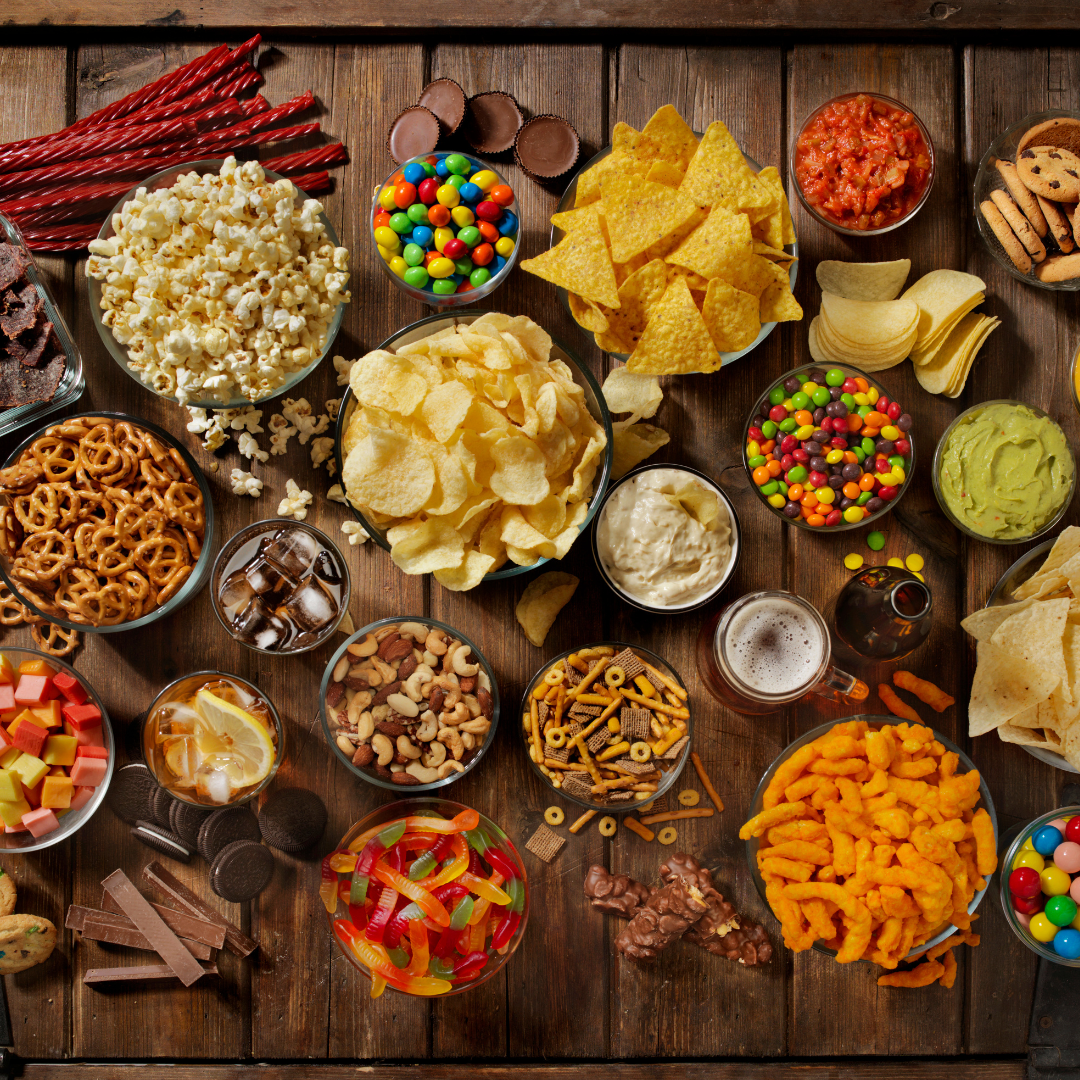
Your brain on stress doesn’t negotiate
Here's what happens in your body when the day goes sideways. Chronic stress floods your system with cortisol (ugh, that word again) and cortisol doesn't just make you feel wired and tired, it actively rewires what your brain finds rewarding.
The quick science behind it goes like this: research on the HPA axis, the command center that runs your stress response, shows that sustained cortisol exposure reaches into the same circuitry that lights up for anything pleasurable, and it specifically increases the reward value of calorie-dense, tasty food(1). Translation: stress doesn't just make you want a cinnamon roll. It chemically upgrades the cinnamon roll's appeal in your brain so it registers as more rewarding when you’re stressed than it would be on a calmer day.
This is the reward-based eating response, and it's not a metaphor. Cortisol (ugh) interacts with hormones like insulin and leptin to push you to crave exactly the foods that wellness culture has spent decades telling you to feel guilty about eating(2). Elevated cortisol creates lasting changes in the brain that make compulsive overeating more likely over time(1). Studies on people under chronic stress consistently find higher rates of reward-driven eating, including a reduced ability to feel satisfied and a tendency to lose control around food once it starts(3), which is what we refer to as binge eating. Although we perceive it as lack of willpower, it's a documented neuroendocrine pattern with a name and a body of research behind it.
Food as the only stress reliever still on the shelf
There's a reason the cinnamon roll wins over the yogurt and it’s because eating it makes you fell better, at least for a few minutes. Stress and palatable food both trigger the release of endogenous opioids, your body's internal feel-good chemicals, and that opioid release actually dampens the stress response itself(1). You're not imagining the relief. Eating genuinely calms the nervous system in the short term. The problem isn't that food doesn't work as a stress reliever, it’s that it's often the only stress reliever available to a woman who hasn't had a single uninterrupted moment alone since 7am.
Researchers studying caregivers specifically, the people running everyone else's logistics while running on empty themselves, found a cluster of altered cortisol patterns, heightened reward-driven eating, and worse metabolic markers all showing up together(4). If you are the household's chief logistics officer, unpaid and unthanked, your biology is responding to that job. It's not a coincidence that the people holding everything together are also the ones whose stress eating shows up most clearly in the research.
Decision fatigue: why the Doritos win the argument before it even starts
By 4pm you have made hundreds of decisions nobody will ever see. What to make for dinner, whether the email needs a reply, whether you can skip the gym today without spiraling into guilt, what tone to use with your mother on the phone. Every single one of those decisions draws from the same finite tank of mental energy, and food choices are not exempt. A recent review of decision fatigue and eating found that depleted mental energy directly leads to more impulsive, less health-conscious food choices, along with reduced willpower and impaired prioritization(5).
This is sometimes called ego depletion (which leads to decision fatigue) and the research describes self-control as a finite resource, much like a muscle that gets tired from overuse(6). Every act of restraint you exercised earlier in the day, biting your tongue in a meeting, saying yes when you wanted to say no, holding it together during the tantrum in the cereal aisle, spent some of that same resource. By the time dinner rolls around, the tank reads empty, and choosing the salmon over the Doritos requires decision-making your brain is no longer equipped to make, so you go for instant gratification.
Studies on ego-depleted women consistently shift toward indulgent, energy-dense foods over more effortful, balanced choices(5). The Doritos won because they require zero additional decisions.
The mental load is the invisible ingredient in every meal you don't make
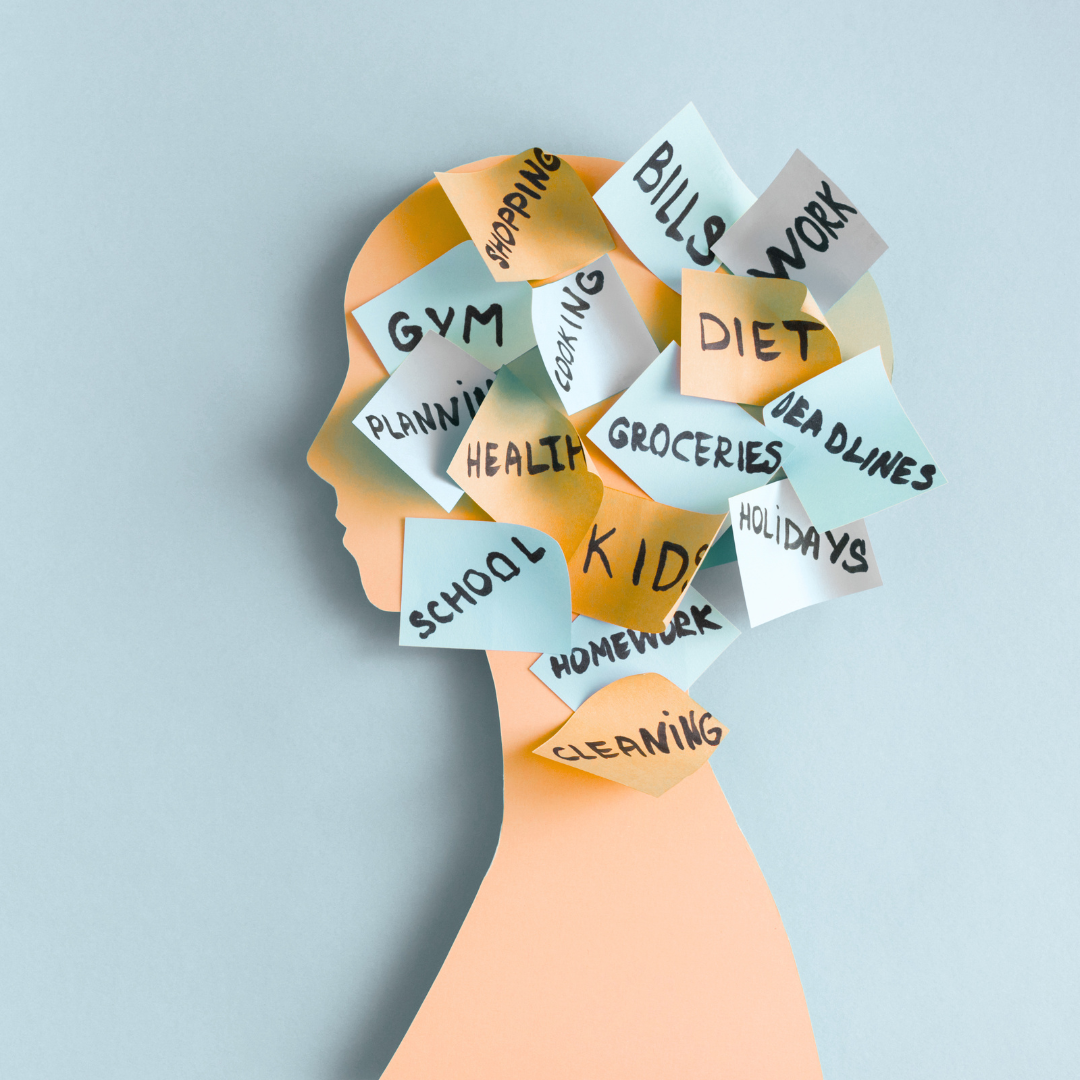
Decision fatigue doesn't start at dinner. It starts the moment you wake up and your brain starts running the household's operating system: who needs to be where, what's running low, what appointment got rescheduled, whose feelings need managing today. This is the mental load, sometimes called cognitive labor, and it is measurably, persistently gendered.
Research using detailed task inventories found mothers carry 67% more items on their mental to-do list than fathers, even when both partners are employed and contributing equally to household income(7). Employment and high earnings reduce a mother's physical chores, but they do nothing to reduce her mental load(7).
This matters for your dinner plate because cognitive labor isn't free. Studies on the gendered division of this invisible work found that the more cognitive labor women carry, the more exhausted they are by the time they get home(8). High cognitive load and multitasking are linked to reduced willpower, impaired long-term decision-making, and increased anxiety(9). You are not just tired from your job, or tired from parenting, or tired from your marriage. You are tired from running a constant background process nobody else can see, and that background process is quietly eating the exact mental resources you'd need to choose the salad.
What your cravings are trying to tell you
Cravings get treated like evidence against you, proof you can't be trusted around food. But when you flip that, cravings are data, and most of them are your body sending a specific, decodable message.
A craving for sugar often shows up alongside a magnesium shortfall, or as a direct response to cortisol pulling stored glucose into your bloodstream and then crashing it back down, leaving your brain hunting for fast fuel(10).
A craving for salt can point to dehydration or to your body working to maintain fluid balance, especially relevant as hormonal shifts during perimenopause affect how your body holds onto sodium and water(11).
A craving for fat is sometimes your body correctly identifying that it needs fat, even if the specific source your brain is reaching for, the fried version instead of the avocado, isn't quite the one it needs(10).
And a craving for refined carbohydrates, the bread and pasta you find yourself wanting more in your forties, lines up with declining estrogen, which interferes with how well leptin can tell your brain you've had enough to eat(12).
None of this means every craving is a precise nutrient deficiency you can solve with a supplement, and I'd be lying to you if I said biology was the whole story because habit, boredom, and emotional association are real contributors too. But the framing matters enormously. Cravings during the menopause transition are increasingly understood in the research as a biologically driven symptom of that transition, not a referendum on your willpower(13).
Your body is talking. The crackers were a message, not a moral failure.
Know someone who would appreciate this? Send this to her.
Small shifts that work with your biology instead of against it
You cannot out-discipline a hormonal stress response, so stop trying to win a fight your reasoning skills were never going to win once cortisol showed up. Instead, try to shrink the number of decisions required when your tank is empty.
Decide on dinner in the morning, when your willpower reserves are fuller, rather than at 5:30pm when they're gone. Keep one or two "good enough" meals on rotation that require no real decision-making at all, the dinner equivalent of autopilot. Pre-portion or pre-prep the foods you want to reach for, because the research on decision fatigue is clear that removing friction from the better choice matters more than willpower ever will(5). For example, if you can’t muster the energy to cook chicken breast, then it’s rotisserie chicken for the win.
Pair protein and fiber at the meals before the danger zone, because steadier blood sugar earlier in the day means less of a crash later. If salt is what you're craving, try water with a pinch of sea salt before reaching for the chips(14). And consider that some of what looks like an evening willpower failure is actually a morning mental load failure: the fewer invisible decisions you're making by 4pm, the more capacity you'll have left to decide what shows up on your plate.
Working with your biology instead of declaring war on it
The wellness industry sells discipline as the answer to a problem that was never about discipline or stricter food rules. You need fewer decisions at the moment your nervous system is least equipped to make a good one, and you need to stop treating a cortisol response as a personal defect because your body is doing exactly what bodies under chronic stress. You don’t have to override physiology by sheer willpower. The goal is to design your days so the system has less to fight against in the first place.
On the guilt that shows up after
No one talks abut the guilt that shows up after making a poor food choice and how it can do more damage than the crackers did. Shame depletes the same finite resource as the decision fatigue, which means a guilt spiral after one "bad" choice often sets up the next one.
If you ate the crackers over the sink, you can simply note what was happening (depleted, overloaded, under-resourced) and move on without the self-flagellation party. The crackers were information, so let them be that and nothing more. You weren't weak, you were depleted, under-resourced, and carrying a mental load no one should have to carry.
That's not a you problem. That's a systems problem wearing a Superwoman costume.
GET YOUR INVISIBLE MENTAL LOAD SCORE
Tired goes away with sleep. Overloaded doesn’t, because the weight of the invisible mental load you carry cannot be relieved with rest. And if you’re in perimenopause, that weight just got heavier while your body got less patient about carrying it.
If this felt familiar, that’s what The Fierce Weekly Edit is for. Every Sunday morning, I rebel against modern wellness culture keeps flattening into “lack of discipline” — the overwhelm, the physiology behind why you feel the way you do, and the tips and small shifts that genuinely help.






Sources
Adam, T.C. & Epel, E.S. (2007). Stress, eating and the reward system. Physiology & Behavior. PubMed, National Institutes of Health.
Adam, T.C. & Epel, E.S. (2007). Stress, eating and the reward system. Physiology & Behavior. PubMed, National Institutes of Health.
Chronic stress is associated with reward and emotion-related eating behaviors. PMC, National Institutes of Health.
Maternal caregivers have confluence of altered cortisol, high reward-driven eating, and worse metabolic health. PMC, National Institutes of Health.
The Effect of Decision Fatigue on Food Choices: A Narrative Review. Nutrients, PMC, National Institutes of Health.
The Neuroscience of Decision Fatigue: Why We Make Worse Choices at the End of the Day. Global Council for Behavioral Science.
Take a Load Off? Not for Mothers: Gender, Cognitive Labor, and the Limits of Time and Money. Socius, as reported by University of Bath.
The gendered division of cognitive household labor, mental load, and family-work conflict in European countries. European Societies.
Gendered Mental Labor: A Systematic Literature Review on the Cognitive Dimension of Unpaid Work. PMC, National Institutes of Health.
What Your Food Cravings Mean For Your Hormones. Paloma Health.
Menopause Cravings: Hormones & Appetite. Winona.
Are Cravings Caused by a Hormonal Imbalance? The Riegel Center.
Menopause Cravings: Hormones & Appetite. Winona.
Understand Menopause Cravings and Emotional Eating. Stella.